The April Announcement That Changed Everything
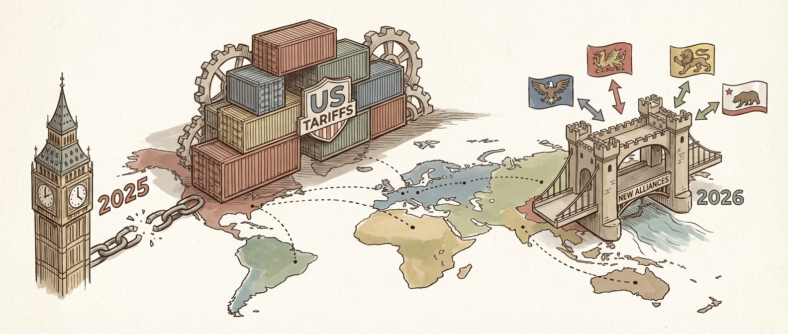
On April 2, 2025, President Trump stood before cameras and announced what his administration called “Liberation Day” – a sweeping tariff regime designed to fundamentally reshape American trade relationships. The specifics were striking: a baseline 10% tariff on virtually all imports, with duties on Chinese goods climbing as high as 145%. It was framed as economic nationalism, a corrective to what the administration characterized as decades of unfair trading practices. And here’s what matters for our purposes: it was real policy, implemented immediately through executive authority, without needing congressional approval.
I want to be direct about something before we go further. I understand the appeal of this approach. There’s a legitimate argument embedded in tariff policy – that American workers have absorbed real costs from global supply chains, that manufacturing capacity matters for national security, and that past trade agreements may have shortchanged certain regions and industries. These aren’t fringe concerns. They’re felt deeply in communities that have watched factories close. But we have to separate the intuitive logic of protectionism from what actually happened when this particular version hit the global economy.
The Household Income Question We Can’t Ignore
The Peterson Institute for International Economics ran the numbers on what this tariff package would mean for ordinary American households. Their conclusion: an average reduction in real household income of $2,600 annually. That’s not a talking point from opposition economists. The Peterson Institute isn’t a partisan operation. It’s a respected research institution that has analyzed trade policy across multiple administrations. This estimate accounts for increased consumer prices, reduced investment, and slower wage growth – the real mechanisms through which tariffs filter down to family budgets.
When you think about that $2,600, multiply it by the median American household. That’s money that doesn’t get spent at local restaurants. It’s the holiday gifts that don’t get purchased. It’s pressure on monthly budgets that were already stretched. The administration’s counter-argument was always that tariffs would protect American jobs, that the short-term pain would yield long-term gain. That’s worth examining seriously – except the job creation never materialized at scale in 2025. Manufacturing employment remained largely flat through the year, while inflation ticked upward in sectors heavily dependent on imported inputs.
How Our Allies Responded – And Why It Mattered
The Trump administration’s tariff strategy assumed that America’s trading partners would quickly capitulate, recognizing American economic leverage. Instead, the European Union launched retaliatory counter-tariffs on approximately 21 billion euros worth of American goods. The EU didn’t do this reflexively – they were quite measured about it – but they did it. Then came the 90-day truce negotiated in May 2025, which sounds like victory until you realize that 90-day truces are emergency measures, not durable solutions.
China’s response was more severe. They implemented retaliatory tariffs that reached 125% on American agricultural exports. Think about what that means for a farmer in Iowa or the Dakotas. Their products suddenly cost two and a quarter times as much in China’s market. Beijing wasn’t negotiating in good faith on this one – they were imposing costs designed to create domestic political pressure on the Trump administration. And it worked. By mid-2025, the USDA committed emergency aid packages exceeding $14 billion to farm states. American taxpayers were writing checks to offset tariff damage. The supposed market solution became a government bailout.
The Global Picture – and What We’ve Learned About Trade
By the fourth quarter of 2025, the International Monetary Fund released its World Economic Outlook. The headline finding: they downgraded global GDP growth projections by 0.8 percentage points. That may sound technical, but it translates to hundreds of millions of people affected. The IMF specifically attributed this revision to trade fragmentation resulting from the American tariff regime. We’re talking about measurable damage to the global economy – not theoretical, not speculative, but tracked and quantified by institutions that monitor these things professionally.
Here’s the uncomfortable truth that honest analysis requires: the tariffs did cause some reshoring of manufacturing. Companies did begin relocating production back to the United States in certain sectors. That part of the theory actually worked. But it happened in a narrower range of industries than promised, the jobs created paid less than the jobs lost in sectors dependent on imports, and the overall economic impact was negative – significantly negative – for most American households.
What This Teaches Us About Power, Policy, and Consequences
I came to this topic wanting to be fair to the protectionist argument because I think it deserves more serious consideration than it often receives in mainstream discussion. There are genuine questions about trade policy, about which arrangements serve American interests, about whether globalization has been managed equitably. These aren’t settled questions. But 2025 taught us something concrete about how tariffs work in practice: they impose costs immediately and visibly, while their benefits tend to be diffuse and delayed. That’s not an argument against tariffs; it’s an argument for implementing them carefully, with genuine consultation, and with realistic expectations about their effects.
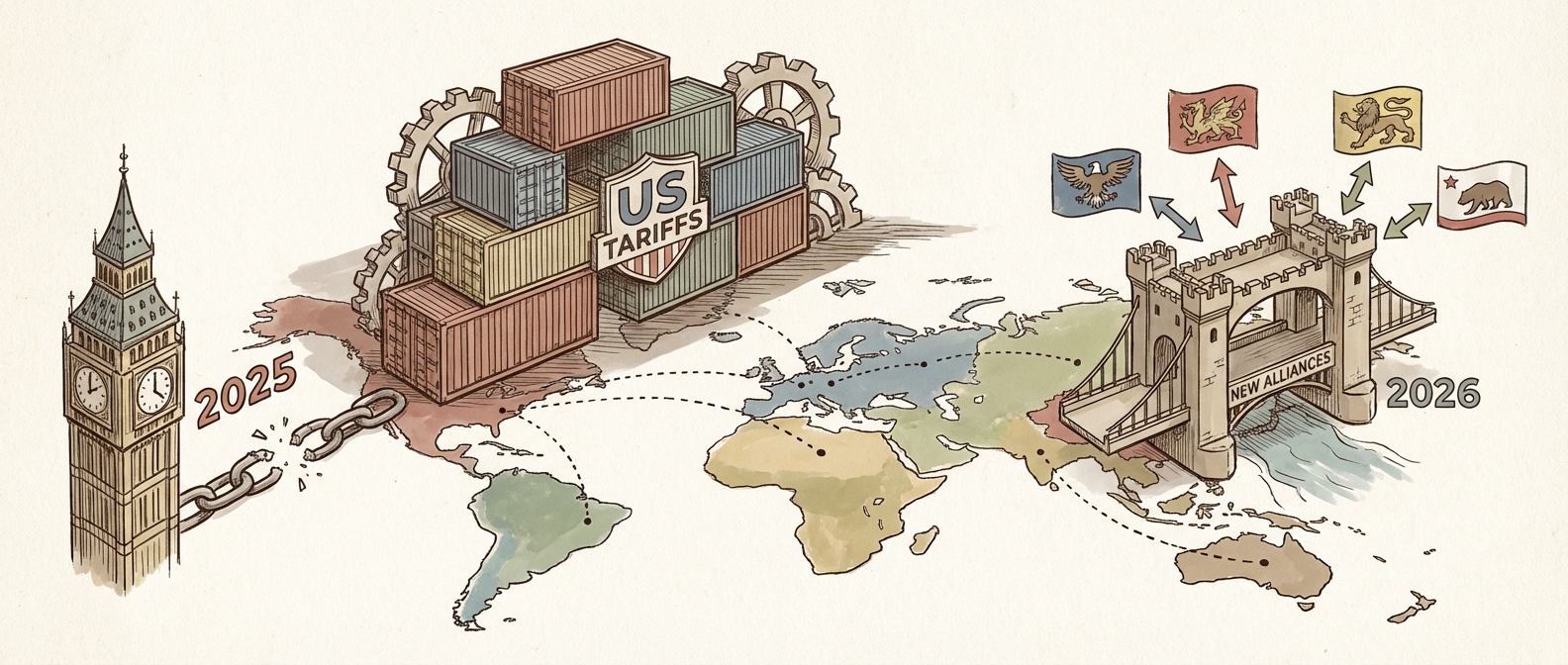
The April 2025 tariff architecture reshaped global trade alliances partly through design and partly through accident. It accelerated the development of alternative trading blocs – the EU strengthened relationships outside the American sphere, China deepened ties with Southeast Asia and India, and the presumption of dollar-based trade superiority got seriously challenged. Whether that’s good or bad depends on where you sit and what you value. But it’s real.
What I keep coming back to is this: the communities that most needed economic revitalization didn’t get it from tariffs. They got inflation and, when the pain became politically untenable, government checks. Meanwhile, consumer prices rose. Businesses that relied on imported components faced genuine hardship. And the global economy contracted measurably. For those who believed tariffs would restore American manufacturing dominance and protect working communities, the 2025 results were at best partial victories wrapped in a larger economic slowdown.
I’m curious about your take on this. Did you experience these tariffs directly? Did your community’s job market shift, or your grocery bill, or your view of trade policy? The data tells one story, but lived experience tells another. That conversation – between evidence and experience – is where real democratic deliberation happens, and it’s what I want to keep exploring here.