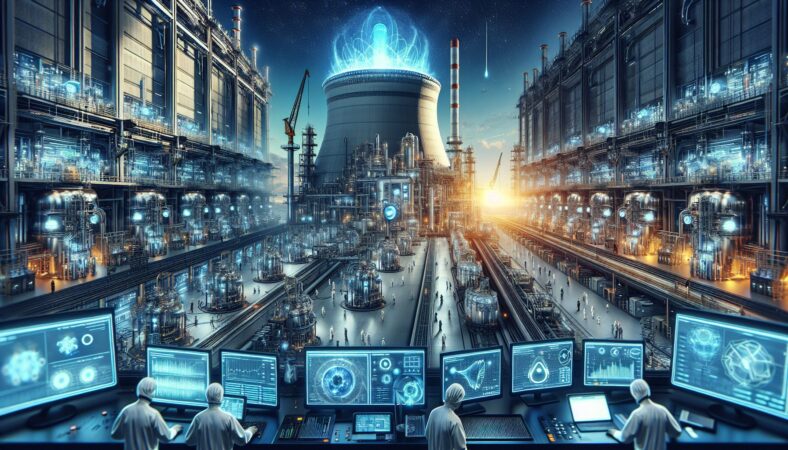
Hello there, fellow techie! Today, let’s talk about something that has kept science nerds and engineers up at night for decades: nuclear fusion. Yes, the same technology that powers the sun and stars. It’s the holy grail of clean energy, and while it’s been “20 years away” for what feels like forever, we actually seem to be getting somewhere this time.
The Promise of Nuclear Fusion
So, what makes nuclear fusion so exciting? Well, it could give us safe, clean, and virtually unlimited energy. Yeah, you read that right, unlimited. But before you start picturing Iron Man’s Arc Reactor, let me stop you right there. It’s not that simple, as any nuclear physicist would tell you in excruciating detail if you gave them half a chance.
Let’s start with the basics. Nuclear fusion works by heating hydrogen atoms to absolutely insane temperatures until they smash into each other and ‘fuse’ together. This process releases a massive amount of energy. To put it in perspective, fusion produces four times as much energy as nuclear fission (what current nuclear plants use), but without all that pesky radioactive waste. Pretty nice upgrade, right?
The Challenge: Containing a Miniature Star
Here’s where things get tricky. Creating a sustained nuclear fusion reaction on Earth is like trying to bottle lightning, except the lightning is actually a miniature star. We’re literally recreating the conditions at the heart of the sun. Imagine trying to hold a blazing inferno with your bare hands. That’s basically what scientists are doing here, except instead of hands, they’re using incredibly powerful magnetic fields.
The holy grail is getting the fusion reactor to produce more energy than it eats up. Scientists call this “ignition,” and it’s what fusion researchers around the world have been chasing for decades. So far, we’ve only managed short bursts of fusion, nothing sustained.
Recent Breakthroughs: Setting New Records
But here’s the good news: we might actually be getting close. This year, the team working on the ITER project (a massive international collaboration involving the EU, USA, and a bunch of other countries) announced they’ve started putting together the first components of their fusion reactor in southern France.
And it gets better! Just a few months ago, researchers at the National Ignition Facility (NIF) in the USA reported their highest fusion yield ever: 1.3 megajoules. For those who didn’t pay attention in physics class, that’s about 25% of the energy their lasers pumped into the hydrogen fuel. Not quite break-even, but we’re getting there.
The Realistic Outlook: Still Some Way to Go
Now, before you start planning your fusion-powered home setup, pump the brakes a bit. Even with these amazing breakthroughs, we’re still years away from fusion power hitting the grid. The ITER project won’t even start its real experiments until 2025. And even then, we’re probably looking at another decade or two before commercial fusion power becomes reality.
It’s a marathon, not a sprint. But the payoff could be huge: cleaner energy, no more worrying about running out of fuel, and yes, you can finally stop feeling guilty about leaving the lights on! The whole thing could completely change how we think about energy. I’m trying not to get too excited, but honestly, it’s hard not to be optimistic.
Concluding Thoughts
So there you have it: a look behind the curtain at nuclear fusion, the science project that’s had researchers around the world working overtime and stress-eating in labs everywhere (myself included when I think about it too hard). The road ahead is long and complicated, but it’s nice to know we’re still reaching for something this ambitious.
If we actually pull this off, who knows? Maybe one day we’ll be using fusion power to fuel our trips to the actual stars.
And on that optimistic note, I’ll wrap up. Stay curious, keep asking questions, and remember: even if nuclear fusion stays “20 years away” forever, at least the science is fascinating!