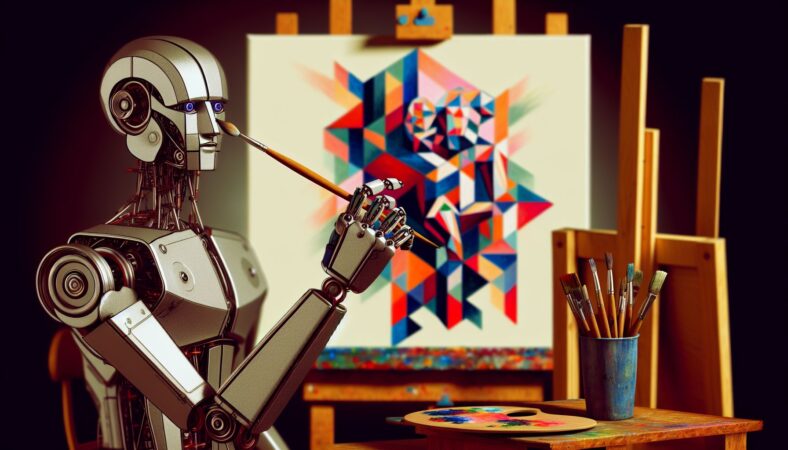
Hello, techno-art aficionados! Welcome back to my humble corner of the internet where we chat about the delightful, exciting, often downright novel intersections of tech and pretty much everything else. Today, it’s all about artificial intelligence (AI) stepping up to the easel. Yes, we’re diving into the heady world of AI in the arts. Can machines create masterpieces? It’s a question straight from sci-fi breakfast convos. So grab a cup of [insert your caffeine fix here] and let’s get into it.
The Dawn of AI-Picassos
Imagine sitting at your favorite outdoor café, an iced flat white (or maybe kombucha for the health nuts out there) in hand, the day pleasantly warm and your spirit soothed by the hum of city life. On the sidewalk, there’s a fascinating scene: an artist, completely absorbed in their craft. You strain your eyes to get a good look, only to realize… the artist is a robot! An AI-powered machine gently dipping its brush into paint and gracefully moving it across the canvas with a wrist action that rivals any human touch.
“Surely not,” I hear you scoff sneaky-smirk style behind your screens. However, dear readers, I’m not pulling your leg. Ladies and gentlemen of the techno-art world, the AI art revolution is real and it’s happening right now. Rapid advances in AI technology have enabled machines not only to mimic human art but to create their own unique pieces. Hold onto your berets, folks.
Ghost in the Machine: Understanding AI Creativity
Alright, it’s time to dig into the meat (or tofu, for my vegan friends) of the matter. How does AI art actually work? Well, the idea of AI dishing up its own unique Mona Lisa involves what techies call ‘generative processes.’ These include machine learning and (raise a glass for) good ol’ neural networks.
Imagine feeding an AI system such as OpenAI hundreds or even thousands of art pieces—from Renaissance classics to modern abstracts—with the hope that it would digest this buffet of cultural heritage and poop out (sorry, I mean produce) its own interpretations. Sounds mind-boggling, but that’s what AI is doing.
Brushes up, Machines: The Rise of Robot Artists
Enough tech talk! Let’s shine the spotlight on some of the robot artists that have been causing quite a stir recently. Grab your virtual tour passes!
One prime example is Ai-Da, the world’s first AI robot artist. Yep, you read that right, AI-artists are not only pen-names of software programs but are full-fledged, eerily human-like robots now. Ai-Da creates artwork, holds her exhibitions, and has even been compared to the early 20th-century surrealists. According to reports, her art has managed to fetch a whopping $1.25 million in sales!
Another prime player is AICAN, an AI artist developed at Rutgers University’s Art and Artificial Intelligence Lab (that’s a place I’d love to have my office coffee breaks). AICAN has created unique works that even confused art critics in a “human or AI” test.
It’s not all paintbrushes and canvases, though. Have you heard of The Next Rembrandt project? They designed an AI powered by data from the Dutch master’s works to create a new art piece in the style of Rembrandt. The result? So uncannily accurate, it prompted a collective gasp from art critics worldwide.
Quality or Quirk: The Great AI Art Debate
Now, the question on everyone’s (read: mine and yours) lips: Is AI-produced art any good? Well, it’s a bit like asking whether pineapple belongs on pizza. It stirs the pot. Some swoon over the enigmatic quality that AI brings to the artistic table, while others cry foul, stating that art should spring from the human soul, not from a series of 1s and 0s stored in silicon.
Unfortunately, techno-art lovers, there’s no definitive word on this issue yet. But as they say, beauty (or art in this case) is in the eye of the beholder. The whole debate is a mixed bag of colors, just like AI art itself.
Future Brushstrokes: Where Are We Headed?
Looking into my crystal ball (okay, it’s actually a snow-globe from a Canadian tech conference), I see a future where AI and human artists co-exist in a symbiotic relationship. After all, every artist needs a muse, and what better muse can there be than an AI that understands and mimics countless art styles?
AI will likely shift how we think about creation, enabling newer art forms that might just redefine our understanding of art itself. So, my techno-art enthusiasts, buckle up! We’re in for a ride filled with GANs, ghouls, and Van Goghs, all sprinkled with a dash of binary code confetti.
Well, there you have it: a sneak peek into the mesmerizing world of AI in the arts. It’s a world that’s throwing up lots of questions and debates, but it’s all part of the fun. Tomorrow, will we wake up to a Vermeer painted by a robot over breakfast? White bread and artful wonder, anyone? Only time will tell, but it’s sure one heck of an exciting time to be alive in the world of techno-art. Catch you in the next blog post where we’ll demystify another tech-happening. Until then, remember: keep your minds open, and the coffee brewing!