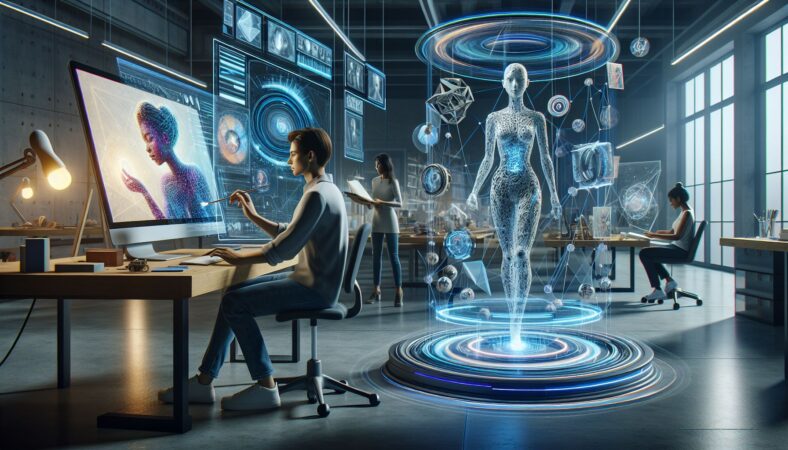
Today, I want to talk about something that’s been making waves in the creative world: artificial intelligence and how it’s changing everything we thought we knew about making art. AI isn’t some far-off sci-fi fantasy anymore. It’s here, it’s real, and it’s already working its way into everything from hospitals to banks. Now it’s knocking on the door of artists’ studios.
AI as the New Artist – Setting the Scene
Art and technology have always danced together, sometimes stepping on each other’s toes, sometimes moving in perfect harmony. But AI has changed the music entirely. We’ve got algorithms that can actually mimic human creativity now. It’s wild when you think about it. What does it even mean to be an artist when machines can paint and compose?
Deconstructing Creativity – the AI perspective
Here’s where it gets interesting. Some people insist creativity belongs to humans alone. But I’ve seen what AI can do, and honestly? It’s pretty impressive. Machine learning algorithms can study thousands of paintings, songs, or poems, find the patterns, and create something new from all that data. We’re talking about machines that compose symphonies, paint portraits, write poetry, and yes, even write movie scripts.
Take Google’s DeepDream, for example. It creates these trippy, psychedelic images that look like something out of a fever dream. Then there’s AIVA (Artificial Intelligence Virtual Artist), which composes classical music for movies and video games by studying Mozart, Beethoven, and other masters. The results are genuinely beautiful.
Impact and Applications in the Artistic World
The thing is, AI is doing two things at once in the art world. First, it’s giving artists a powerful new tool. Think of it like getting a really sophisticated paintbrush that can suggest colors you never would have thought of. It can spark ideas and push artists into unexplored territory.
But here’s what really gets me excited: AI is making art accessible to everyone. You don’t need years of training to create something beautiful anymore. There are platforms where anyone can design posters, compose music, or write stories with AI assistance. That opens up so many possibilities for new types of art that blend different disciplines.
Of course, it’s not all smooth sailing. We’re dealing with some serious questions about copyright, authenticity, and what happens to human creativity when machines can do similar work. These aren’t easy problems to solve.
The Future of AI in Creativity – A Dystopian or Utopian Outlook?
So where does this all lead? I keep hearing people ask whether AI will replace human artists entirely. Honestly, I don’t think that’s the right question. The better question is how we can work together.
I’m optimistic about this. Machines are incredible at processing information and finding patterns, but they can’t feel heartbreak or experience joy the way humans do. They don’t have personal stories or emotional baggage that drives great art. What we might see is collaboration where AI handles the technical heavy lifting while humans bring the soul.
The key is treating AI as a creative partner, not a replacement. When we do that, we keep what makes human art special while exploring what technology can add to the mix.
Wrapping Up: AI and Art – A Dance of Possibilities
Watching AI enter the creative world has been fascinating. It’s one of those moments where you realize technology isn’t just changing how we work, it’s changing how we think about creativity itself.
Are we witnessing the birth of a completely new era in art history? Maybe. What I do know is that the combination of human creativity and artificial intelligence is producing things I never expected to see. As someone who loves both art and technology, I can’t wait to see what comes next. The dance is just getting started.