
The Moment Everything Changed: Phase Two and the Unraveling
Let me walk you through something that happened in early 2025 that most people missed, even though it was broadcast live to anyone paying attention. In January, negotiators finally got a ceasefire agreement across the finish line. Phase One was concrete: 42 days without fighting, 33 Israeli hostages released, Palestinian prisoners freed in exchange. It was the kind of deal that makes you believe humans can actually problem-solve under impossible pressure. But here’s what matters for understanding where we’re headed in 2026: Phase Two negotiations stalled by March. Completely stalled.

This wasn’t just another diplomatic setback. This was the moment when the real architecture of the conflict became visible. When Phase Two fell apart, it revealed something deeper than disagreement over terms. It showed how economic interests, geopolitical positioning, and military calculations actually determine what gets negotiated and what doesn’t. If you want to understand 2026 geopolitics, you need to understand why that happened.
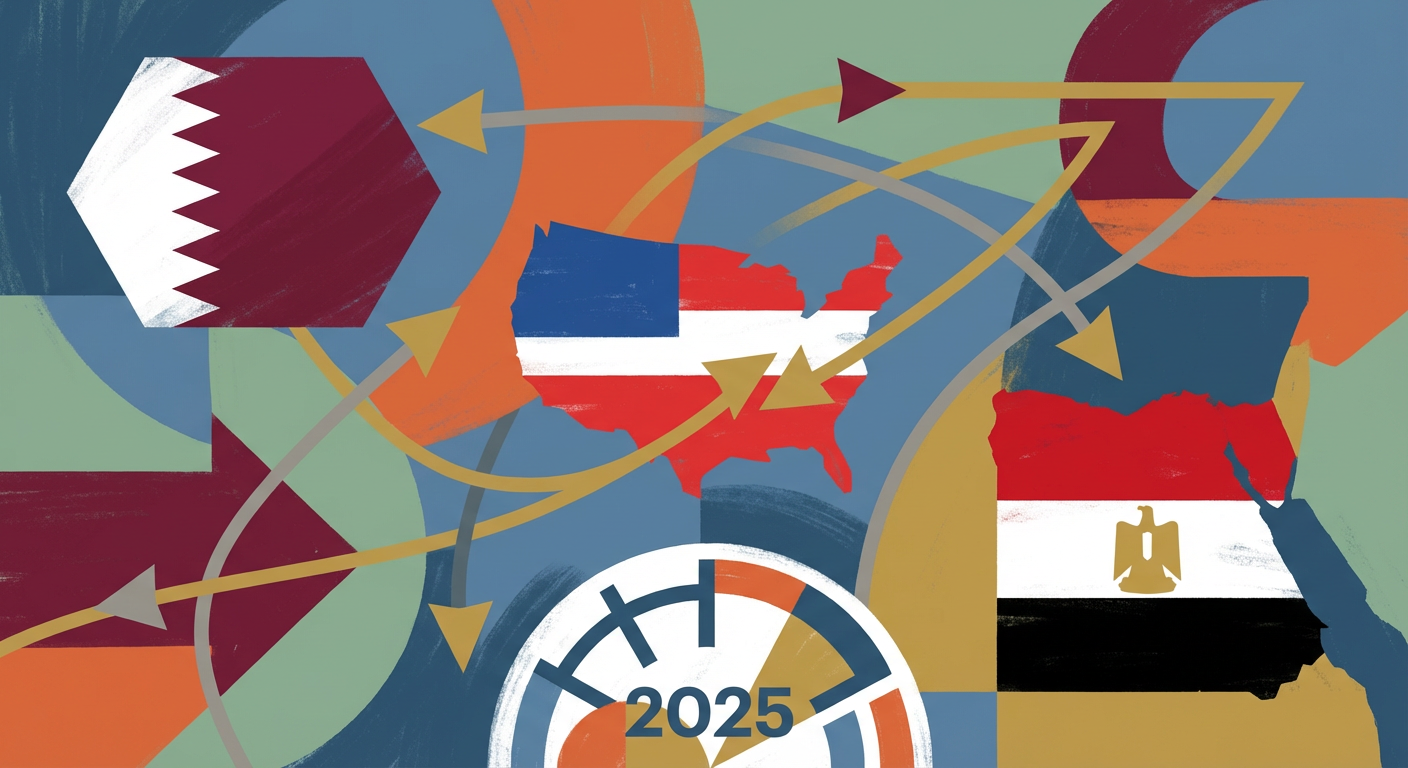
Follow the Mediators: Qatar, Egypt, and the Veto Power Nobody Talks About
Three countries spent 2025 trying to hold a ceasefire together that was crumbling. Qatar’s foreign minister Mohammed Al-Khatija conducted over 40 documented shuttle diplomacy trips. Forty trips. That’s not a side project. That’s a country betting significant diplomatic capital on preventing a regional war. Meanwhile, Egypt and the United States were simultaneously trying to mediate while protecting their own strategic interests. The economic calculation is pretty clear: Qatar has positioned itself as a regional power broker through years of investment in diplomatic infrastructure and relationships. A collapsed ceasefire damages that positioning. Egypt depends on Suez Canal revenue and regional stability. The United States has military assets and security commitments throughout the Middle East.
But here’s what’s revealing about the incentive structure: even with three major powers working overtime, even with constant shuttle diplomacy, the ceasefire’s second phase couldn’t hold. That tells you something crucial. The forces pulling toward resumed conflict were stronger than the forces pulling toward peace. In geopolitics, that’s almost always about what’s at stake economically and militarily for the major actors. When negotiations fail despite intensive mediation, follow the money and the military calculations, not the rhetoric.
The Security Council Vote Breakdown: Understanding American Veto Strategy
Between January and December 2025, the UN Security Council held nine emergency sessions specifically about Gaza. Let that sink in. Nine times. And three times during those sessions, the United States exercised its veto power on resolutions related to a permanent ceasefire. This is the kind of detail people gloss over, but it’s actually the clearest window into how power functions in practice.
When a permanent Security Council member vetoes a resolution, it’s making a public statement about costs and benefits. The U.S. vetoes were cast on resolutions aimed at permanent ceasefire arrangements. That means the calculations going into those decisions involved weighing the diplomatic cost of vetoing against something the administration deemed more important. Maybe it was security commitments to allies. Maybe it was concerns about the resolution’s language. Maybe it was signaling to regional partners about what terms the U.S. would accept. The point is, you don’t cast a veto unless you’ve decided that blocking international consensus serves an interest you consider worth protecting. Those three vetoes are data about what Washington’s actual priorities were in 2025, separate from what any official said publicly.
The Humanitarian Count: 2.1 Million People Dependent on Aid
In late 2025, the UN Office for the Coordination of Humanitarian Affairs reported that over 2.1 million Palestinians in Gaza remained dependent on international humanitarian assistance just to have food security. That’s not a prediction. That’s a documented humanitarian situation. You can check UN OCHA Gaza Humanitarian Situation Reports yourself and see the scale. This number matters for 2026 because humanitarian dependency creates political leverage and economic pressure. It creates refugee flows that affect neighboring countries. It shapes public opinion that affects governments. It creates moral claims that affect international law. When you have that many people dependent on food assistance, the calculus for any negotiator changes.
These 2.1 million people are not abstract statistics. They’re a fact on the ground that every mediator, every military planner, every diplomat has to account for. They affect what’s politically possible. They affect what regional allies will tolerate. And they affect what kind of pressure international actors face. When humanitarian dependency persists at that scale, it becomes part of the structural problem that any sustainable agreement has to address.
The International Court and the Genocide Convention Constraint
Here’s something else that was happening simultaneously with the diplomatic failure: the International Court of Justice issued two additional provisional measures orders related to the Gaza conflict in 2025. The March ruling specifically cited obligations under the Genocide Convention. You can review the actual legal proceedings at International Court of Justice: Gaza-Related Proceedings. These aren’t abstract legal documents. These are international rulings that create legal obligations and legal exposure for states.
When the ICJ issues provisional measures orders citing genocide convention obligations, it’s drawing a legal boundary around what kinds of actions carry potential consequences. That affects the calculations for any actor considering military options. It creates risk, potential accountability. Negotiations happening in 2026 are happening under legal constraint that didn’t exist in the same way before. States know there’s an international court reviewing their actions. That changes incentives at the margins, and margins matter.
What This Tells You About 2026 and Beyond
So here’s what the ceasefire collapse actually reveals about the year ahead: we’re in a period where the forces pushing toward negotiation exist simultaneously with strong incentives pushing away from it. Countries are investing heavily in mediation while also protecting their own strategic interests. Humanitarian dependency creates pressure for agreements while military and political calculations push back against them. Legal constraints exist now that didn’t before. And 2025 gave us a track record showing that even intensive mediation can fail to bridge those gaps.
The question for 2026 is whether any of those variables shift enough to change the outcome. Do new mediators emerge? Do economic pressures change? Do military calculations shift? Do domestic political changes in key countries create space for different decisions? These are the actual questions worth asking. Not whether people want peace. Of course they do. The question is whether the incentive structures align in a way that makes agreements possible and durable.
What do you think is the most significant constraint on peace agreements that we haven’t talked about enough? I’d genuinely like to know what patterns you’re seeing that I might be missing. This is the kind of question that gets clearer when people who care about this bring their own research and observations to it.