Category: Blogging

The Climate Policy Money Game: Where Trillions Flow and Power Shifts

The Ticking Clock of Climate Economics

The world’s leading climate scientists have drawn a line in the sand at 2030. This is the decade when humanity must fundamentally reshape its energy systems or face irreversible climate breakdown. This timeline isn’t just about environmental science anymore. It has become the organizing principle for the largest economic transformation in human history, with governments, corporations, and financial institutions racing to position themselves in a rapidly changing landscape worth trillions of dollars.

The urgency has created massive opportunities for those who can navigate the transition quickly, while threatening to strand entire industries and communities that depend on fossil fuels. As Carbon Brief climate analysis shows, the scientific consensus has become an economic imperative that is reshaping global capital flows in ways that would have been unimaginable just a decade ago.

Carbon Markets: The New Global Tax System

Carbon pricing mechanisms now govern nearly a quarter of global greenhouse gas emissions through an expanding patchwork of cap-and-trade systems, carbon taxes, and regulatory frameworks. This is one of the fastest-growing policy interventions in modern economic history, essentially creating a shadow tax system that operates across borders and sectors.

The European Union’s carbon market has become the template, generating billions in revenue while driving industrial transformation. China’s national emissions trading system covers more emissions than any other single program. California’s cap-and-trade system links with Quebec’s, creating cross-border carbon flows that bypass federal trade policy. These aren’t just environmental programs. They are massive wealth redistribution mechanisms that reward clean industries while penalizing carbon-intensive ones.

The uneven implementation creates significant competitive advantages for countries and companies operating under these systems. European steel producers argue they need carbon border adjustments to compete with imports from countries without carbon pricing. Chinese manufacturers are retooling supply chains to meet carbon standards that unlock access to premium markets. The result is a new form of economic geography based on carbon intensity rather than traditional trade relationships.

Industrial Policy Returns with Green Justification

The climate crisis has provided political cover for the return of aggressive industrial policy in the United States, European Union, and China. The Inflation Reduction Act channels hundreds of billions in subsidies toward clean energy manufacturing, electric vehicles, and battery production. The EU’s Green Deal Industrial Plan mobilizes state aid rules to compete with American incentives. China continues massive public investment in renewable energy and electric vehicle supply chains that dominate global markets.

These programs represent a fundamental shift away from the market-oriented policies that dominated the previous four decades. Politicians who once championed free trade now argue for domestic content requirements and manufacturing subsidies in the name of energy security and climate action. The Climate Policy Initiative tracks how this spending reshapes not just energy systems but entire regional economies around clean technology clusters.

The competition has created a subsidy arms race that benefits clean energy companies while dividing them along national lines. American solar manufacturers lobby for tariffs against Chinese imports even as they rely on Chinese supply chains. European wind companies seek protection from American subsidies that lure investment away from EU projects. The global nature of climate change collides with increasingly nationalist approaches to climate solutions.

The Unequal Burden of Transition

Behind the grand rhetoric of green transformation lies a messier story of who pays the costs and who reaps the benefits. Communities built around coal mining, oil refining, and natural gas production face economic devastation as these industries decline. The concept of “just transition” acknowledges this reality, but the politics of implementation reveal deep tensions about how to distribute the costs of climate action.

Labor unions in fossil fuel industries find themselves caught between environmental imperatives and economic survival. Some embrace retraining programs for renewable energy jobs, while others fight to preserve existing employment in coal and oil. The transition creates winners and losers within the same communities, as some workers successfully move to clean energy jobs while others face long-term unemployment or wage cuts.

Rural communities that hosted fossil fuel extraction often lack the infrastructure and workforce to attract clean energy investments. Urban areas with universities and tech sectors more easily transition to clean energy economies, widening regional inequality. State and local politicians must balance environmental goals with economic realities for their constituents, leading to complex coalitions that don’t fit traditional partisan divisions.

Global Climate Finance and Corporate Accountability

The establishment of a loss and damage fund at COP27 was a breakthrough in international climate negotiations, but its minimal funding reveals the gap between climate ambition and financial commitment. Vulnerable nations successfully argued that wealthy countries should compensate for climate impacts they didn’t cause, but the actual money flowing toward adaptation and recovery remains far below identified needs.

Meanwhile, corporate net-zero commitments have proliferated faster than the standards to evaluate them. Major corporations announce ambitious climate targets while continuing to invest in fossil fuel projects or purchase questionable carbon offsets. Shareholders and regulators increasingly scrutinize these claims, creating new legal and financial risks for companies that overstate their climate progress.

The scrutiny has spawned an entire industry of climate accounting firms, verification services, and ESG rating agencies that profit from corporate climate commitments. These intermediaries shape how climate action gets measured and rewarded, but their own incentives don’t always align with actual emission reductions. The result is a complex ecosystem where financial performance and climate performance intersect in ways that aren’t always transparent.

Understanding how money, power, and policy intersect in climate action reveals both the possibilities and limitations of our current approach to this global challenge. The enormous financial flows and policy changes of the past few years show unprecedented momentum, but they also highlight how economic and political interests shape climate outcomes in ways that don’t always serve broader public goals. As these trends accelerate toward the 2030 deadline, tracking where climate money goes and who controls these decisions becomes essential for anyone trying to understand how this transformation will unfold.
Visegradplus — Policy Without the Noise

Visegradplus — Policy Without the Noise

Rigorous political analysis for readers who want to understand the system, not just react to it.

Political coverage has a problem: it’s designed for outrage. We do the opposite. Every piece we publish starts with primary sources, policy documents, and expert analysis. We cover power, how it works, and how it affects you.

Topics we cover: Domestic Policy · Foreign Affairs · Elections · Economics · Law & Courts · History

Cracking the AI Code in the Creative Arts

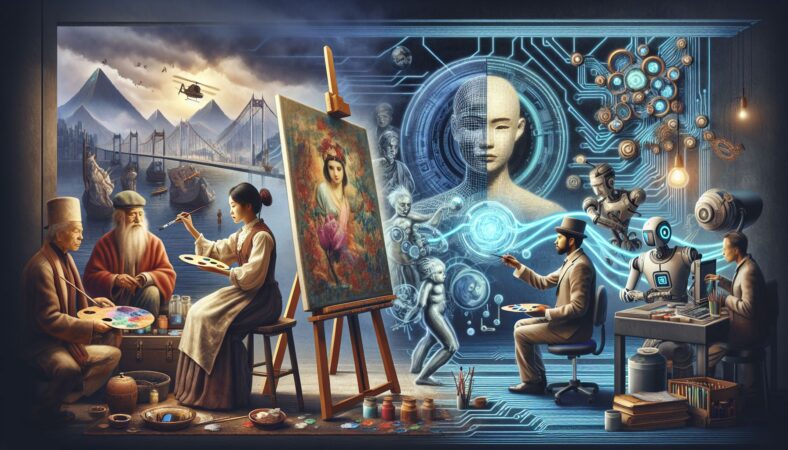
Friends, gather ’round, because I assure you, we’re not in Kansas anymore. No disrespect to Kansas, but the creative world has changed so much lately that it feels like we’ve tumbled down the rabbit hole. And at the center of it all? You’ve guessed it. Our old friend AI. Buckle up, because we’re about to dive into how artificial intelligence is changing the creative arts.

Off to the Races: AI’s Entry into the Creative Arena

It all started as a hobby project for some brilliant folks at Google with their DeepDream. Remember that? Suddenly everyone could turn into Van Gogh, with each uploaded photo becoming a swirling, dreamy landscape that was part reality, part psychedelic trip.

But wow, how far we’ve come since then! Now we’re living in a world where AI-generated art sells for nearly half a million dollars at Christie’s. Crazy? Maybe. Fascinating? Absolutely!

I’m a bit of a traditionalist when it comes to art. Give me a good old Salvador Dalí or Pablo Picasso any day. But I have to admit, AI’s entrance into the creative world has me curious.

Let’s be honest, most of us (myself included) were skeptical about AI creating art at first. “Art needs real human emotion and instinct! AI can never copy that!” was the common reaction. Creativity felt uniquely human, something unquantifiable that can’t be programmed into robots and algorithms.

My doubts started shifting after seeing the works by AICAN, the AI artist developed by Rutgers University’s Art and Artificial Intelligence Lab. The system, trained on over 80,000 pieces of art, began producing compelling pieces that made me question what creativity really means and whether AI can actually move people emotionally.

Da Vinci Code: How Does AI even Create Art?

Alright, it’s easy to get caught up in AI’s artistic achievements. But let’s stop for a moment and think about the ‘how.’ How is AI even doing this?

AI art happens through something called a Generative Adversarial Network, or GAN for short. Basically, a GAN has two parts: an artist and a critic. The artist creates the art, and the critic judges the work based on what it knows about art.

Picture Picasso and Da Vinci in a room with Da Vinci painting and Picasso offering critiques until they both agreed on a masterpiece. Sounds wild, right? But that’s pretty close to how GANs work! Endless trial and error, constant improvement, and eventually, you get a work of art.

The Creative Future With Artistic AI

Even with all the doubters, I think AI isn’t trying to replace human creativity. Instead, it’s here to enhance it. Like a high-tech paintbrush, it’s just another tool for artists to use and explore new creative territory.

Take OpenAI’s MuseNet, for example. It’s an AI project that can write entire songs, from Mozart-style classical pieces to modern pop songs. When human artists use tools like this, we might see completely new combinations of styles and creative possibilities we never imagined.

Wrapping Up

At the core of this conversation is a big question about creativity: is it something only humans can do, or can AI contribute in its own way? Maybe AI will never truly understand the emotion behind the yellow in Van Gogh’s “Sunflowers” or grasp Picasso’s passion in “Guernica.”

But AI’s effect on the art world can’t be ignored. These algorithmic artists are here to stay, and honestly, I’m excited to see how they’ll continue mixing with human creativity to change what art can be.

As always, art is in the eye of the beholder, whether that eye belongs to a human or a computer trained on thousands of paintings. For now, I’m ready to grab a cup of coffee, sit back, and watch this AI Renaissance happen. So stick around, my friends, because our technological trip down the rabbit hole is just getting started!

Bridging the Gap between Reality and Sci-fi: AI in the Creative Arts

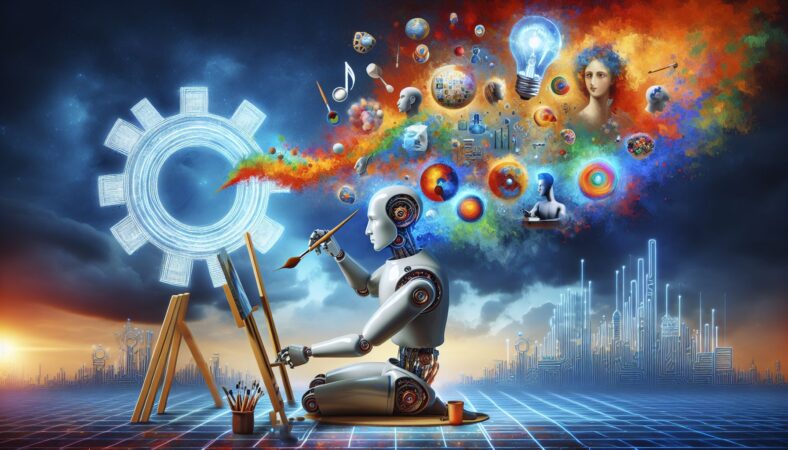
Alright, fellow trend-watchers! Roll up your sleeves, dial up your curiosity levels, and adjust your lens to focus on a fascinating corner of the tech world that feels like it’s leaping straight out of sci-fi novels and onto today’s canvas: AI in the creative arts.

Smart Paintbrushes and Beyond: AI Gearing Up for a Stroke of Genius

A lot is happening in AI-land. Heck, I even heard rumors of a sentient toaster last week that engaged its owner in a philosophical discussion on the existence of good and evil (Kidding! Those rumors may not always contain factual content). Yet, talk about AI and most of the attention goes to funny chatbots, self-driving cars, or machines that beat champion players at their game. But there’s another slice of the AI pie that’s turning heads: AI in the creative arts.

Remember that AI-generated portrait, “Edmond de Belamy”, which sold for a whopping $432,500 at Christie’s? Or OpenAI’s MuseNet creating an amazing rendition of Bohemian Rhapsody? By using algorithms and neural networks, artists and techies are exploring uncharted creative territory, bringing together AI’s innovative power and the authentic spark of human art.

When Algorithms Meet Aesthetics: The Basics of AI Art Creation

The basics of AI in creative arts mostly revolve around machine-learning algorithms. Here’s the thumbnail sketch of how it works. AI, through a process called ‘deep learning’, gets trained on thousands of art pieces ranging from traditional art to modern day creations. Each art piece gets broken down into tiny details: the lights, the darks, the textures, the brush strokes, everything that makes up an artwork. The AI absorbs it all, learns the essence of creativity (how daunting is that?), and then, copying these learned traits, it creates its own unique piece of art.

Deep Art Effects, DeepArt.io, Prisma—these AI apps let users turn their photos into art by using filters inspired by famous artworks. And we’re not talking about just simple copying; we’re talking about real transformation. Music videos, movie scenes, TV ads get reimagined while keeping the style and essence of great artists like Picasso, Van Gogh, and Monet. Soon enough, your Instagram feed might become a virtual Louvre!

AI Artists: Infinite Potential or Creativity on a Leash?

As with any tech breakthrough, there’s a bit of a debate brewing about AI’s potential in this arena. There’s a divide between those who see AI’s entry into the arts as an exciting new tool in the creative process and those who believe it threatens the sanctity of human creativity.

In the AI art camp, folks view AI as a new medium, similar to how we use paintbrushes or digital design software. They argue that art is about ideas and expression, and if a machine can help with that pursuit, why not embrace it? It’s like inviting a new guest to the creative party. I mean, who’s saying no to an extra sidekick, right?

On the flip side, there are those who are highly skeptical. Artists who view AI as a threat to human creativity, fearing the prospect of human imaginations losing their hold over the creative arts. In their view, AI might take the magic out of art, turning it into a calculated, predictive product, empty of the raw, untouched essence that only a human heart can bring.

To be fair, both viewpoints have merit. Yet, we can’t ignore that the mixing of technology and creativity has always shaped the way we generate and perceive art. Photography, digital art, VR art—aren’t these all examples of technology pushing the boundaries of artistic expression?

Weaving Dreams with Pixels: The Future of AI in Creative Arts

The potential for AI in the creative arts is enormous, and we’re only at the tip of the iceberg. Imagine an AI composing a symphony inspired by Beethoven or creating a virtual reality installation that explores complex human emotions. Powerful machine learning could add diversity and depth to the creative process, opening up limitless possibilities, with plenty of controversy stirring the mix.

I believe it’s not a question of AI taking over human artists, it’s about the collaboration of the two. If AI can help artists push their creative boundaries, then it’s something to celebrate. Will it create challenges? Of course, it will. It’s a wild new world out there. But hey, wasn’t every great leap in technology a bit of a wild ride?

In the end, AI in the creative arts is just another dimension of human imagination exploring new depths. Mixing algorithms and aesthetics might seem like a radical pursuit, but isn’t that what creativity is all about? Challenging conventions and venturing into the unknown? As for me, I’m pouring a big bucket of popcorn and settling in to enjoy this beautiful art-tech relationship.

Until next time, keep exploring, keep innovating, and of course, keep adding puns to your tech talks. Because, why not.

AI and the Fourth Industrial Revolution: Creativity Unleashed

Hello fellow techno-enthusiasts! Yours truly is back to blow your mind with another scoop from the digital frontier. Today, we’re diving into a subject that hits me right in the feels, Artificial Intelligence (AI) and its transformative impact on the arts. Strap yourselves in, because it’s about to get pixelated.

Painting a Picture of AI in the Arts

Think back to the time when you first laid eyes on Starry Night or marveled at the details of The Last Supper. Art in all its classic, human-made glory has a unique way of touching our hearts, am I right? Now, what if I told you that AI could do the same? You’d likely laugh, raise an eyebrow, maybe both. But hear me out.

Remember that AI, in its essence, seeks to mimic and, dare I say, amplify human capabilities. There’s no denying that it’s been a game-changer in fields like healthcare, logistics, and the automotive industry (looking at you, Tesla Autopilot).

But now, AI is pushing its chips to the center of the table and going all-in on artsy stuff like painting, music, and literature. It’s like we’ve smashed the ‘I’m Feeling Lucky’ button on Google’s Creative search.

A Symphony of AI Tune-ups

I kid you not when I say that AI is composing symphonies, and folks, it’s got some chops. AI systems like AIVA (Artificial Intelligence Virtual Artist) and OpenAI’s MuseNet have been composing music that would impress even Beethoven.

These AI composers analyze patterns in different musics, learn the underlying melody and rhythm structures, and ‘BOOM’, they create compositions that can get your head bobbing or your tears flowing. It’s enough to give any aspiring Mozart out there a bit of a complex.

But let’s remember, the AI isn’t replacing humans here. It’s giving composers a new tool to explore and experiment with, pushing music into spaces it might never have gone otherwise. Plus, Beethoven doesn’t have to worry about carpal tunnel.

The AI Miniaturist and Other Short Stories

We’ve been entranced by tales spun from creative minds since we first grouped around the fire in our prehistoric caves. Fast forward a few millennia, and AI is joining the storytelling circle.

Companies like OpenAI and Frase have developed models that can write articles, poetry, even entire short stories. I’m not trying to flatter myself, but picture a future daily tech blog written by an AI that’s learned my style down to the last twinkle of humor. Breaks my heart, but it’s coming, folks.

Yet again, like in music, AI’s role in literary creativity isn’t a hostile takeover. It’s more of a friendly collaboration. AI is helping writers avoid writer’s block, come up with new ideas, even do grammar checks (blessing and a curse, indeed).

Da Vinci Code: AI Style

When you think of AI and art, visual art is likely the first thing that pops into your head. And why wouldn’t it? AI is doing some seriously impressive stuff in this space.

Google’s Deep Dream and DeepArt can take a picture (like of your drooling dog) and re-contextualize it in the style of any great artist of your choice, from Picasso to my main man, Van Gogh. They’re bringing all new meaning to the phrase ‘beauty is in the eye of the AI beholder’.

AI’s capabilities aren’t confined to reproducing existing styles either. Thanks to the magic of Generative Adversarial Networks (GANs), we’ve got AI systems creating utterly unique artworks from scratch. It’s enough to make any artsy-fartsy heart do a happy dance.

Immortal, Virtual Art

This AI venture into arts and creativity isn’t just about churning out artworks, music, or literature. It’s also about reimagining and immortalizing art in ways never thought possible.

AI has breathed new life into ancient art forms we thought lost to time, creating visual and audio replicas so convincing that even a connoisseur would have trouble telling them apart from the originals.

Imagine reliving a concert by an artist who passed away decades ago, authentically recreated by an AI. Kind of takes ‘fan tributes’ to a whole new level, doesn’t it?

Looking Towards an AI-tistic Future

To summarize, this artistic experimentation with AI is making waves that can shape our future in extraordinary ways. The intersection of arts and AI is proving to be another fascinating application of a technology already bursting at the seams with possibilities.

Sure, we’ve got a lot to figure out in terms of intellectual property, algorithms gone rogue, and the potential displacement of human creators. But hey, when did we let challenges deter us from making the futuristic dream a reality?

So, it would seem that the Fourth Industrial Revolution has ushered in an exciting combo of silicon and sequins. It’s a different kind of revolution, one that’s winning hearts one note, one pixel, one word at a time. If that’s not techno-utopian stuff, I don’t know what is!

Stay curious, stay inspired, and most importantly, stay plugged in! And remember, art, like technology, is just another way of keeping a diary. Only now, it’s an AI diary.

Signing off until the next tech whirlwind hits. Byeeee!

The Potential of Nuclear Fusion: Clean Energy’s Holy Grail

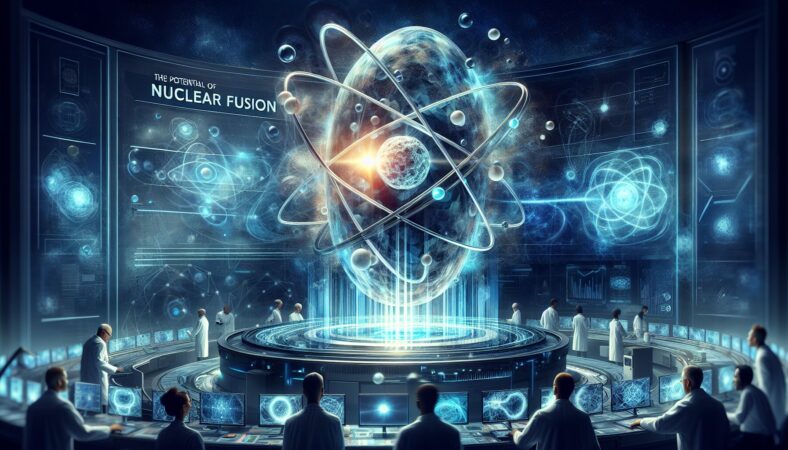
Greetings fellow tech aficionados! Today, we’re going to kick the tires and check under the hood of something truly awesome. It’s an idea that has fueled science fiction fantasies and real-world research for decades. It’s controversial, it’s fascinating, and if it works, it could solve our clean energy conundrum once and for all. Yup, you guessed it – we’re talking about nuclear fusion.

A Quick Primer on Nuclear Fusion

Before we dive deeper (pun totally intended), let me explain nuclear fusion in the simplest terms possible, without the excessive scientific jargon.

Imagine taking two very light atoms, squishing them together under extreme heat and pressure, and producing a heavier atom. Now, because of this funky thing called the Law of Conservation of Mass (thank you, Mr. Einstein), you’re left with some spare energy after your atomic cookout. And when I say ‘some’ energy, I mean a lot.

Fusion specifically involves combining hydrogen atoms to form helium. It’s the process that powers our friendly neighborhood star, the Sun, and it releases energy more efficiently than any source we currently know or harness.

The Promise of Infinite Energy

Now, fusion energy isn’t a new concept. Sci-fi writers have been scribbling about it for years, and it’s always popping up in tech news. But recently, there are rumblings in the industry that put a big “maybe sooner” sticker on it.

Companies and collaborations worldwide are pumping billions of dollars into research and trials. Even the often-standoffish tech titans are coming together. Something like the ITER project, an international fusion collaboration, started decades back but is now starting to look promising.

We’re not any closer to launching a fusion-powered spaceship à la “Star Trek,” but at the speculative end, some folks believe we could build a prototype fusion reactor in a decade or so.

The appeal of nuclear fusion, if we can make it a reality, is hard to overstate. It promises near-infinite energy, with no greenhouse gas emissions, and abundant raw materials available in sea water. You know, just a clean, seemingly unlimited power source that could solve our climate woes. It’s the dream!

The Challenges of Harnessing Sun Power

But why, then, haven’t we been able to bring this sci-fi dream to life? The main reason: it’s technically complex, and understating that is like saying Elon Musk has a tiny interest in space travel.

Fusion requires heating up a gas to over six times the temperature of the Sun’s core, which ain’t a walk in the park, folks. And after you’ve achieved that, you need to control this super-hot plasma and get more energy out than what you put in.

Getting to that point has proven elusive. We’ve seen some brilliant experiments like the recent one at China’s EAST reactor, showing an artificial Sun burning for over 17 minutes, but we’re still chasing the net energy output needed for a power plant.

The Fusion Future

While the timeframe to a fusion future remains uncertain, the strides we’re taking in this decade are encouraging. Just go on and ask anyone at Commonwealth Fusion Systems, a startup spun off from MIT which is already testing components for its first fusion reactor.

I won’t hang my hat on the claim that we’ll be drawing power from fusion reactors within our lifetime. But I am convinced that pursuing this frontier is essential. Wind and solar are huge steps in the right direction, but if we’re serious about tackling climate change and energy scarcity, fusion could be the ace in the hole.

It’s got the dreamer in anyone humming David Bowie’s “Starman,” and with recent strides, maybe it’s not just the sci-fi nerds like me who’re excited.

So here’s to a future filled with clean, abundant energy, however we get there. Whether fusion becomes our holy grail or just an interesting tech adventure, it’s a journey worth following. As always, stay curious and keep an eye on the horizon. Science has a way of surprising us when we least expect it.

Until next time, keep the tech vibe alive!

AI in Creative Arts: When Code Meets Canvas

Ever had a moment when you’re immersed in a brilliant book or mesmerized by a painting, and you wonder how the minds behind such masterpieces work? I sure have. I remember the first time I read George Orwell’s ‘1984’ (impressive when you’re 16). Swept away by the alternate reality in its pages, I wanted to take a quick trip inside Orwell’s mind.

Fast forward a few years—well, a couple of decades—and I’m still just as fascinated by the process of creativity. Today, though, it’s not only human brains I’m curious about; ironically, it’s a completely different kind of “brain,” a non-organic, algorithmic kind. Yep, you guessed it! Artificial Intelligence (AI) fascinates me, and it’s causing a minor revolution in the creative arts as we know it.

Creativity and AI: Now that’s a Plot Twist!

Ex Machina, A.I. Artificial Intelligence, even the weirdly comical (or is it comically weird?) Hitchhiker’s Guide to the Galaxy; you can notice a common thread in all these movies. AI steps on human turf and everyone freaks out!

It’s happening folks! Not the Hollywood part, but real AI involvement in the arts. But let’s take a moment here. Do you remember when you first heard of a computer creating art? My “aha” moment was when I learned about Google’s DeepDream. The idea that code—not a creator in the painterly sense—could produce art genuinely startled me!

And OpenAI’s GPT-3 has shown us that AI’s writing abilities have evolved far beyond the random gibberish it used to spew. Now, AI can weave narratives, create poems and even engage in somewhat coherent debates.

AI in Visual Arts: The Machine Artist

Speaking of visual AI, we’ve arrived in an era where AI can express itself artistically. Take DeepArt or Prisma, for instance. These applications use AI techniques, turning ordinary photos into artwork. Basically, it’s imitation: they reinterpret images in the style of existing artworks. Yes, it’s a bit like having Van Gogh or Picasso in your pocket.

A shift came with Generative Adversarial Networks (GANs). Remember the portrait of Edmond de Belamy? You know, the one that sold for a staggering $432,500 at Christie’s. And guess the artist? Not some legendary name, but an AI model trained by Paris-based art collective Obvious.

And it’s not just static art; AI is breaking ground in film too. Have you seen Sunspring or Zone Out? They were written by an AI, and they’re as weird as you’d imagine.

AI in Literary Arts: A Prose from the Processor

As an avid reader, seeing AI leap into the literary world fascinates me. Earlier attempts produced mostly nonsensical material, but sophisticated models like OpenAI’s GPT-3 have raised the bar. GPT-3 can create surprisingly plausible text that’s hard to distinguish from human-produced content.

But wait, there’s more! Novels, poetry, plays—you name it, AI has tried its digital hand at it. Believe it or not, an AI-written novel nearly won a literary prize in Japan in 2016. And an AI even managed to (kind of) replicate Shakespeare!

Critiques, Challenges, and Questions. Plenty of them!

Of course, it’s not all roses. There’s been much debate on whether AI-generated art can be genuinely creative. Does an AI model ‘feel’, ‘experience’, or ‘express’? Currently, most people agree that AI is mimicking, not understanding, human creativity. Maybe that’s why Edmond de Belamy was signed by the GAN equation itself!

Also, tricky questions of ownership, copyrights and licensing keep popping up. If an AI generates an opera, who owns the rights—the creator of the AI or the AI itself?

But these challenges shouldn’t crush the spirit of exploration or make us shy away from this disruptive meeting of AI and art.

Bold Visions, Futuristic Canvases

AI has already begun rewriting the rules of the creative world, introducing us to mind-boggling new possibilities. Can you imagine a future where you collaborate with AI to paint, write, or compose music? Or, how about streaming your thoughts and moods to a personal AI, which then paints how ‘you’ feel—not in broad, human-defined strokes, but with the precision of a machine?

What if AI could end art forgery, using algorithms to definitively tell originals from fakes? Or, imagine AI archeologists, trained to excavate and recreate lost arts from mere fragments?

This AI-induced “renaissance” is both exciting and bewildering. We’ve barely scratched the surface, and the fusion of artificial intelligence with human-like creativity is a story that’s only just beginning. So here I am, eagerly waiting for the next AI-Banksy!

As we sit at the edge of an AI-shaped creative shift, conjuring up such ‘sci-fi’ ideas seems less crazy each day. Movements like these are redefining what creativity means, and I, for one, can’t wait to see how this plot unfolds. What about you?

The Intrinsic Intersection of AI and Creative Arts: A Technological Marital Bliss

Hey there fellow tech-enthusiasts! I have something really interesting to chat about today. As you and I well know, Artificial Intelligence (AI) is gradually but steadily making its way into every field of the modern world. Although some people think of ‘AI’ and ‘machine learning’ mainly in terms of finance, healthcare, telecommunications, you know, the more ‘serious’ fields, it’s time we flipped the script. Today, our spotlight is on an unexpected marriage that’s producing chef’s kiss beautiful offspring. Hang tight as we unpack the fusion of AI and the creative arts!

AI in Creative Arts: A Foreign Concept?

I know, I know, it might initially sound as out of place as pineapple on a pizza (forgive me Hawaiians). When I first stumbled upon the term ‘AI’ amidst the sprawled palette of an artist or the harmonious cacophony of a music studio, my eyebrows did an involuntary jig into a skeptical arch. Perhaps yours are doing the same right now (funny visual, isn’t it?). However, the moment I started exploring this world, the discoveries were nothing short of astonishing. The age-old assumption that creativity belongs exclusively to humans is getting a serious reality check.

A Palette of Pixels: AI in the Visual Arts

Let’s try to paint a picture. Artists for centuries have turned blank canvases into masterpieces. But with AI entering the scene, both the process of creation and the definition of the artist are changing. Consider the case of AICAN, an AI algorithm that has already had its work exhibited in galleries. The AI takes inspiration from existing art history to create pieces that are rooted in the past, but unique to its own ‘style.’ It’s like Van Gogh meeting Picasso in the cybernetic realm. Weirder things have happened, right?

Now, the question that comes to mind (mine at least, maybe you were pondering about the fate of pineapple on pizza) is about originality. Can we count an AI algorithm’s creation, based on human art, as ‘original’? Well, my two cents — it doesn’t diminish the value of human artists. Instead, it opens up a new dimension for us to explore, appreciate and critique.

The Symphony of Code: AI in Music

Believe it or not, this union isn’t just giving birth to visual masterpieces, but it’s also serenading us with noteworthy compositions. In the realm of music, AI is hard at work creating complex musical pieces that skip over the fence of human cognitive boundaries.

Take OpenAI’s MuseNet as an example. It’s a deep learning model that can generate 4-minute musical compositions with 10 different instruments, spanning a variety of styles and genres. It doesn’t just mimic existing compositions; it innovates in ways a human mind could never fathom. I’ll drink to that!

Dancing with the Droids: AI in Performance Arts

Now, if you’re anything like me, you probably thought we were already stretching the boundaries with AI in visual arts and music. Well, hold onto your hats (or headphones) because AI is pirouetting its way onto the stage of performance arts as well.

Human-robot interactions are being transformed into dynamic, choreographed dances that blur the lines between man and machine. For example, Wayne McGregor’s performance piece ‘Living Archive’ uses AI algorithms to explore new combinations of movements and choreographic possibilities. As someone with two left feet, I can only blink in astonishment.

The Future of AI and Creative Arts: Thoughts?

So, there you have it; a sneak peek into the fascinating fusion of AI and the creative arts. This unexpected coupling is making waves across the globe and I, for one, am excited to ride this wave. Whether you are an artist, a music enthusiast, a technology addict, or just a curious onlooker, you’ve got to admit, the collaboration is intriguing.

While the cynics among us might see this as just another way AI is encroaching upon ‘human territory,’ I choose to see it differently. AI isn’t replacing human creativity; it’s augmenting it, challenging it, and pushing it towards uncharted territories. The possibilities are as vast and endless as your local pizza topping options. And at the end of the day, isn’t that kind of the point?

So, next time you see an interesting piece of art or hear a catchy tune, take a moment to ponder. It could be human genius, it could be artificial intelligence, or better yet, it could be the harmony of the two. How’s that for a reality check?

The Art of the Possible: AI in Creative Arts

Hello my tech-savvy pals! Today, I’m buzzing with excitement because I’ve stumbled onto something that’s been keeping me up at night. As someone who loves both tech and creativity, I’m honestly fascinated by how these two worlds are colliding. You’d think tech is all algorithms and logic while creativity is pure emotion and intuition, right? Well, that line is getting blurrier by the day, thanks to our star of the show: Artificial Intelligence. Today, we’re jumping into how AI is shaking up creative arts, from music to movies, painting to poetry. Want to explore this wild techno-artistic world with me? Let’s go!

AI as the Muse

Artist’s block is brutal, folks. Any creative person knows the agony of staring at a blank canvas or empty page. We’re only human, after all. That’s where AI comes in. With its ability to crunch massive amounts of data and spot patterns we’d never see, artists are turning to AI to jumpstart their imagination. They’re literally birthing creativity from code.

Look at OpenAI’s GPT-3. This language model is so advanced it writes poetry and generates storylines that’ll make your head spin. You can actually outsource part of your brainstorming to a machine now. Wild, right?

Painting a Picture with Algorithms

If AI creating masterpieces sounds crazy to you, buckle up! AI isn’t just dabbing in paint, it’s cranking out full Picasso-level stuff. These algorithms study thousands of paintings, learn styles and techniques, then spit out their own unique images.

Google’s DeepDream is a perfect example. It takes regular photos and transforms them into these trippy, surreal images that look like something from a fever dream. Robots painting? AI having actual dreams? Just another Tuesday in our weird new world.

AI-Maestro and the Symphony of Code

If visual art is Mount Everest for creativity, music has to be K2. Another impossible peak. But AI isn’t just climbing these mountains, it’s planted a flag and made itself at home.

Aiva Technologies built an AI composer that’s already writing music for films, ads, and video games. And if Elon Musk’s Neuralink can get a monkey playing video games with just its thoughts, how long before we get our first AI-composed Billboard hit? I’m genuinely curious.

Lights, Camera, Action… Algorithm!

As a total movie nerd, this one really gets me going. AI is now muscling into Hollywood. These algorithms can analyze hit scripts, spot what works, and suggest directions for new screenplays. Everyone from indie filmmakers to major studios is warming up to having an AI assistant on set. Seriously, the next Oscar could go to an algorithm.

Bridging the Gap Between Human and AI Creativity

This tech-art mashup excites me, but let’s be real, it’s not all smooth sailing. There are some thorny questions about authenticity, originality, and who gets credit when AI helps create something.

I get the concerns, I really do. What makes art special is its humanity. The raw expression of joy, pain, love, all those messy human feelings. Can a machine actually capture that? Honestly, I’m not sure. Time will tell.

Bringing it Home

Look, we’re living through some pretty incredible stuff right now. AI is smashing every stereotype and boundary we thought existed.

AI isn’t just copying human creativity anymore. In the art world, it’s becoming a real partner, a co-creator working alongside artists to make something neither could do alone.

But as we keep pushing these limits, we need to remember the importance of keeping human intuition and emotion in the mix. Our ability to create, feel, and express is what makes art meaningful in the first place. As we venture into this uncharted territory, it’s going to be exciting, sometimes unsettling, but always pushing what’s possible. Keep an eye on you, AI! Catch you next time, tech lovers!

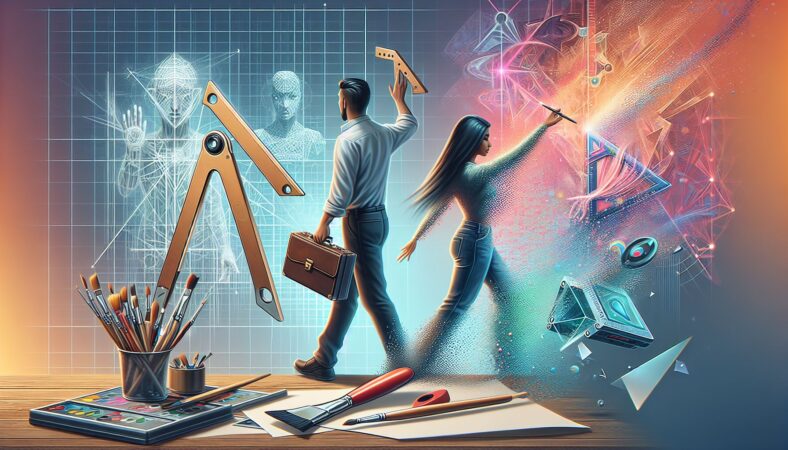
Goodbye T-Squares, Hello AI: The Creative Leap In Art and Architecture

Have you seen the AI art marveling the world recently? No more tussling with T-squares or fussing over proportions – artificial intelligence has begun revolutionizing creative arts recently and, trust me, it’s pretty awesome!

As someone who was knee-deep in traditional art supplies as a kid (I’m never going to get over the nostalgia of pastel dust smeared all over my fingers), the rapid rise of AI in the creative arts feels like an exhilarating leap into the future. It’s opening doors I never thought possible.

When AI Becomes The Artist

Now, it’s no secret that AI is transforming the art domain. While computers and digital technology have captured the creative world for some time, AI takes this to a much bigger level. It’s not just copying anymore, it’s actually creating. Who would’ve thought our humble PCs could one day turn into Picasso?

Remember that portrait “Edmond de Belamy” that an artificial intelligence system sold for a mind-blowing $432,500 at Christie’s? Or when OpenAI’s MuseNet stunned the music world producing harmonic tunes no human could concoct? Pretty remarkable, right?

As an art enthusiast, this is an electrifying time. We’re witnessing art creativity in a new dimension, and I personally find it fascinating how AI merges logic with intuition, procedure with randomness, and patterns with creativity. It’s like watching a new kind of brain at work: The AI artist.

AI In Legacy and Promise: Architecture Redefined

Aside from painting and music, another creative industry where AI is planting its foot firmly is architecture. It’s like Frank Gehry and Rem Koolhaas have morphed into super-architects with near super-power abilities, thanks to these new AI developments.

Generative design, a process that uses AI algorithms to create countless design solutions based on pre-set parameters, is bringing a new architectural revolution. It’s exhilarating to imagine AI exploring billions of possibilities in a fraction of the time it would take human designers.

For instance, the AI tool “Dreamcatcher” engineered by Autodesk, helps architects design energy-efficient buildings, perfectly adapting to climate, materials, and usage patterns. As someone who loves a sustainable lifestyle, the prospect of AI perfectly balancing aesthetic, utility, and climate-friendly architecture feels like the dawn of something special.

The Dialectics: Are We Ready To Embrace AI Artists?

As much as the incursion of AI into the creative arts is exciting, it’s also been raising some eyebrows. Intriguing questions about copyright, originality, and the essence of creativity are surfacing in this new AI-art-world order.

Is an artwork still original if an algorithm spit it out? Does AI actually create, or just mimic well-taught patterns? Even though I’m an AI-optimist at heart, I notice these dilemmas through my rose-colored glasses, and I think they’re important to grapple with.

Honestly, as AI continues to blur the line between human and machine creativity, these questions add a philosophical layer to our techno-advances. They challenge us to think not just about “how far can we go” technologically, but “how far should we go” ethically and aesthetically.

Seizing the AI Wave: What’s Next?

In the long run, as we immerse ourselves into the world of AI creativity, the possibilities seem limitless. The fusion of human and machine intelligence can spawn unimaginable creative outcomes, going beyond traditional artistic boundaries.

Let’s think of AI as a tool, a set of brushes in our artistic palette. Some it uses on its own, while others work in our hands. By carefully navigating the challenges, I believe we can harness the power of AI to truly elevate our creative abilities. Like catching a wave and riding it, instead of being swept away.

As we stand at the edge of this shift in the creative arts field, we’re definitely peering into a thrilling tomorrow. The metamorphosis from T-squares to AI paintbrushes is staggering, and I can’t wait for what unfolds next in this tech-creative drama.

All aboard, artists and onlookers! The AI show has already begun!

The Creative Reinvention of AI in Arts

Hey there folks! If you’re like me, utterly infatuated with all things tech related and always looking out for the crossroads where technology and creativity meet, get ready. I’ve got a doozy for you today. We’re stepping into the eclectic world of artificial intelligence (AI) infiltrating the visual arts. And, hold on to your hats because this ain’t some dystopian nightmare straight out of a Hollywood Sci-Fi flick. It’s the beautiful marriage of machine learning and human creativity, and it’s nothing less than astounding. Join me, as we explore the colorful kaleidoscope that AI has brought into the world of art.

AI’s First Strokes on The Canvas

Let’s rewind a bit to the Picasso of AI’s artistic revolution, the one that set the stage for the computerized revolution in the world of art, the luminary that is Google’s DeepDream. Released in 2015, DeepDream was an experiment that showed how a neural network can be reverse engineered to create intriguing, dream-like images. It wasn’t perfect, and the surrealistic dog renderings it pumped out resembled more of a bad acid trip than bona fide art (to each, alien-dog-art loving own), but it hinted at the potential of AI in generating unique artistic content independently.

Fast forward to 2018 bursting onto the scene, we have “Portrait of Edmond de Belamy” by Obvious, an AI artist collective. This work of AI-art was auctioned off by Christie’s for an attention-grabbing sum of $432,500. Yes! You read that right. AI-created art was being bought for a price that could well buy a small island.

Getting Intimate with AI’s Creative Process

So, how exactly does computer-generated art work? The AI’s artistic process is no less fascinating than the result. The magic happens with something called a Generative Adversarial Network (GAN). In layman’s terms, a GAN pits two AI models against each other: the generator, which is trained to create seemingly random images and the discriminator, which is trained to discern between man-made and AI-generated art.

The two start their creative dance, squabbling and learning from each other. The generator keeps constructing images, the discriminator keeps judging them until one day the generator creates an image that the discriminator can’t recognize as AI-generated. And voila! AI-created art is born.

The Fine Art of Collaborating with AI

Now, purists might sniff at the idea that machine-generated art is indeed art. They argue that true art requires human heat, soul, and err, well, other passionately human stuff. To them, I say, welcome to the era of human-AI collaboration. Enter artists who see AI as a useful tool, a creative sidekick if you prefer, to augment their art. As Albert Einstein put it,”Even on the most solemn occasions, I got away without wearing socks.” Wait! Wrong quote. Here’s the right one: ”The true sign of intelligence is not knowledge but imagination.”

Take Mario Klingemann, who uses AI to play around with historic portraits and interviews, or Anna Ridler, who used AI to create a video installation from 10,000 tulips. These artists use AI not as a substitute but as an enhancer, using its capabilities to realize visions that might not be possible with mere human hands.

What’s Next on AI’s Artistic Journey?

Like everything else, AI’s evolution in the world of arts isn’t slowing down. Playform, an AI art studio, is working on creative tools that allow artists to collaborate with AI in more intuitive ways. Christie’s and Sotheby’s are regularly auctioning AI-created art, indicating a growing acceptance in the larger art community.

What comes next is anyone’s guess, but mine would be more collaboration. As AI continues to advance and improve, the potential for human-AI artistic collaboration is only going to grow. Artists mixed with AI, creating, inventing, and pushing boundaries. That’s a world I’m excited about.

Concluding Brush-strokes

In parting words, whether you perceive AI in art as Orwellian or an usher of a new creative era, one can’t deny the novelty it brings. AI in creative arts is a thrilling intersection that reminds us of the limitless potentials of technology. It forces us to question the depth of creativity, like “Can a machine truly be creative?” or “How many licks does it take to get to the center of a Tootsie Roll Pop?” Maybe that last one was a stretch, but you catch my drift.

And to respond to the skeptics, would I replace my favorite Da Vinci with an AI-generated portrait? Probably not (unless it’s like, really good). But would I be enthralled by the endless possibilities that AI brings into the realm of art? Heck yes!

AI’s entrance into the art world isn’t the end of human creativity. Rather, it’s the beginning of a new chapter in our endless journey to create and inspire. It’s our next step towards turning the technological utopia we’ve dreamt about into a reality. So here’s a toast to the moment where AI and creativity collide, and give birth to a whole new panorama of artistry! Can’t wait to see what’s painted next.

Embracing Our Algorithmic Artists: AI in Creative Arts

Hello, fellow tech enthusiasts! It’s certainly not an alien concept when I say that technology pervades every corner of our lives. From automated homes, electric vehicles, blockchain, even to the looming prospect of working beside quirky robots, we are living in a fascinating era. But today, let’s park our Teslas and steer clear of Bitcoin price trends for a bit. Let’s chat about an emerging tech trend that’s causing quite the ripples in the world of art—Artificial Intelligence in creative arts.

The Dawn of Algorithmic Artists

Just to toss some history into the mix, AI in creative arts didn’t start yesterday. The seeds were planted back in the 60s and 70s with pioneering artists like Harold Cohen who designed AARON, an autonomous AI program for creating art. Fast forward to today, and AI’s impact on the arts has exploded. We’re now seeing AI-created paintings, music, poetry, dance choreographies, and more!

Remember “Portrait of Edmond De Belamy,” created by the AI model GAN (Generative Adversarial Network)? When it went under the hammer at Christie’s, it sold for a whopping $432,500! If this isn’t the techno-utopian dream we’ve all been fantasizing about, I don’t know what is.

The Mechanics of AI Artistry

So, how exactly does this wizardry work, you ask? The science behind this is quite simple on the surface but complex underneath. AI algorithms and models like GANs are trained on massive amounts of data (artworks, music, literature, etc.) and then generate their own unique, creative pieces.

The result? Take OpenAI’s Jukebox model, which created an entire album mimicking the musical style of Elvis Presley. The King might have left the building, but AI seems capable of filling in his blue suede shoes, don’t you think?

The Grand Dilemma: Originality vs Creativity

Now, let’s dig a little deeper. Can AI truly be creative? This question sparks intense debates. I mean, AI just processes tons of data and pattern-matches its way to generating art. It doesn’t have emotions or creative consciousness, right?

I agree, but then let’s pause here a little and marvel at how well AI has imitated and replicated human creativity! Isn’t that a form of creativity too? As we grapple with this debate, remember, when photography first emerged, people dismissed it as mechanical and soulless. Look where it stands today!

The Artistic AI’s Playground: Opportunities and Challenges

Yesterday, it was Deep Blue beating a Chess Grandmaster, today it’s AI models creating symphonies and paintings. The progression of AI from analytical to creative tasks is genuinely intriguing.

There’s potential for AI to democratize art, making it more accessible to those who may lack the talent but not the passion. AI models can work as creative tools, turning everyone into potential artists. We see this with platforms like Google’s DeepDream and Runway ML, which provide tools for creating AI art.

At the same time, this fusion brings challenges too. Copyright infringement and plagiarism, for starters. If an AI model creates an artwork inspired by Van Gogh’s paintings, who gets credited? Also, as AI becomes more sophisticated, distinguishing between human and AI art could become tricky, impacting the value and perception of art.

A Future Painted with AI

Thinking about the exciting developments and the challenges makes it clear that we are on the cusp of an extraordinary fusion of art and technology. Brace yourselves, folks, the dawn of algorithmic artists is just the beginning.

Tomorrow’s art world might see AI as a creative partner rather than a tool, even witnessing the birth of “hybrid” art, a fusion of human and AI creativity. Wouldn’t that be something? As we step into this era, let’s keep enjoying the magic that AI brings to our artistic realms, much like the careful brushstrokes of a Picasso masterpiece.

Signing off for today, folks. Keep that tech curiosity roaring and never stop marveling at the wonders of our techno-utopian world!