Page 10 of 11

Fusing Forward: A Peek Into the Future of Nuclear Fusion

Hello there, fellow techie! Today, let’s talk about something that has kept science nerds and engineers up at night for decades: nuclear fusion. Yes, the same technology that powers the sun and stars. It’s the holy grail of clean energy, and while it’s been “20 years away” for what feels like forever, we actually seem to be getting somewhere this time.

The Promise of Nuclear Fusion

So, what makes nuclear fusion so exciting? Well, it could give us safe, clean, and virtually unlimited energy. Yeah, you read that right, unlimited. But before you start picturing Iron Man’s Arc Reactor, let me stop you right there. It’s not that simple, as any nuclear physicist would tell you in excruciating detail if you gave them half a chance.

Let’s start with the basics. Nuclear fusion works by heating hydrogen atoms to absolutely insane temperatures until they smash into each other and ‘fuse’ together. This process releases a massive amount of energy. To put it in perspective, fusion produces four times as much energy as nuclear fission (what current nuclear plants use), but without all that pesky radioactive waste. Pretty nice upgrade, right?

The Challenge: Containing a Miniature Star

Here’s where things get tricky. Creating a sustained nuclear fusion reaction on Earth is like trying to bottle lightning, except the lightning is actually a miniature star. We’re literally recreating the conditions at the heart of the sun. Imagine trying to hold a blazing inferno with your bare hands. That’s basically what scientists are doing here, except instead of hands, they’re using incredibly powerful magnetic fields.

The holy grail is getting the fusion reactor to produce more energy than it eats up. Scientists call this “ignition,” and it’s what fusion researchers around the world have been chasing for decades. So far, we’ve only managed short bursts of fusion, nothing sustained.

Recent Breakthroughs: Setting New Records

But here’s the good news: we might actually be getting close. This year, the team working on the ITER project (a massive international collaboration involving the EU, USA, and a bunch of other countries) announced they’ve started putting together the first components of their fusion reactor in southern France.

And it gets better! Just a few months ago, researchers at the National Ignition Facility (NIF) in the USA reported their highest fusion yield ever: 1.3 megajoules. For those who didn’t pay attention in physics class, that’s about 25% of the energy their lasers pumped into the hydrogen fuel. Not quite break-even, but we’re getting there.

The Realistic Outlook: Still Some Way to Go

Now, before you start planning your fusion-powered home setup, pump the brakes a bit. Even with these amazing breakthroughs, we’re still years away from fusion power hitting the grid. The ITER project won’t even start its real experiments until 2025. And even then, we’re probably looking at another decade or two before commercial fusion power becomes reality.

It’s a marathon, not a sprint. But the payoff could be huge: cleaner energy, no more worrying about running out of fuel, and yes, you can finally stop feeling guilty about leaving the lights on! The whole thing could completely change how we think about energy. I’m trying not to get too excited, but honestly, it’s hard not to be optimistic.

Concluding Thoughts

So there you have it: a look behind the curtain at nuclear fusion, the science project that’s had researchers around the world working overtime and stress-eating in labs everywhere (myself included when I think about it too hard). The road ahead is long and complicated, but it’s nice to know we’re still reaching for something this ambitious.

If we actually pull this off, who knows? Maybe one day we’ll be using fusion power to fuel our trips to the actual stars.

And on that optimistic note, I’ll wrap up. Stay curious, keep asking questions, and remember: even if nuclear fusion stays “20 years away” forever, at least the science is fascinating!
The Magic of AI in Creative Arts: Revolutionising Expressivity

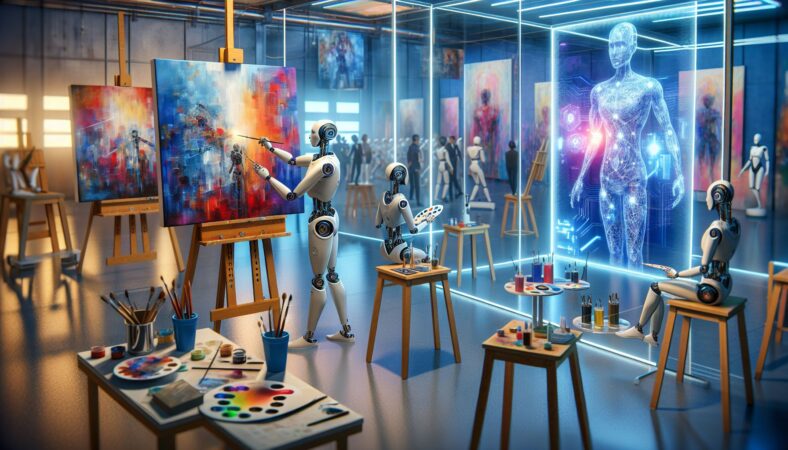
Good morning, techno-savvy mates! I’m beaming with excitement today because, confession time folks, I live and breathe for the mind-blowing intersection of technology and creativity. And right now, there’s a phenomenal play unfolding on that stage: Artificial Intelligence in creative arts. As a self-confessed tech and art buff, I feel like a kid in a candy store seeing my two loves embracing each other. Let’s jump in and explore this thrilling spectacle together!

AI Meets Art

Rewind to a few years back, could you have imagined a machine producing awe-inspiring artworks, writing soul-stirring poetry or composing mesmerizing music? If you’re like me, probably not. But here’s the kicker: it’s happening, and the results are nothing short of spectacular!

Whether we’re talking about paintings generated by Google’s DeepDream, or song compositions from OpenAI’s MuseNet, or even poetry spun out by the likes of GPT-3, creativity isn’t just for us squishy humans anymore. AI is jumping on the bandwagon, and folks, it’s pulling off some seriously fancy moves.

So is this techno-euphoria, techo-terror or simply techno-utopia? Stick around, as we get our hands in the AI-art cookie jar.

Behind the Easel: The Mechanics

But before we dive deeper into AI’s creative fancies, let’s spare a moment to appreciate the nitty-gritty. Remember, at the heart of these artistic AI marvels is a complex network of algorithms and computations, all designed and fine-tuned by a team of human engineers (hats off to them, really).

Neural networks, in particular, are a big deal here. They’re designed to imitate how our own human brains work, breaking down tasks into teeny-tiny pieces and processing them simultaneously. Technologies like DeepArt and DeepDream use convolutional neural networks to mimic artistic styles and create otherworldly images.

The Art of Knowing: AI’s Unseen Muse

You might be wondering, “What does AI know about art or creativity?” Well, the short answer: a surprising amount! These AI engines can consume vast swaths of text, music, or images. The more they ingest, the more they learn and understand patterns within those various art forms. It’s like wolfing down hours and years of art history, music theory, and literature classes in a split second. (And here I was, thinking I was special because I could play ‘Stairway to Heaven’ on my guitar, sigh)

The Picture So Far: AI in Visual Arts

Venturing into the realm of visual arts, we’ve got AI models creating unique paintings. DeepArt can turn your selfie into a Van Gogh-style masterpiece or DeepDream churning out psychedelic artwork that would make Salvador Dali do a double take. And who can forget the portrait generated by GANs-based engine, which was auctioned off for an astonishing $432,500 at Christie’s!

What’s fascinating to me is that AI doesn’t just imitate existing styles, it creates something entirely new by adding its own unique twist to it.

AI: The Budding Poet and The Maestro

AI doesn’t stop at visual arts. It’s making some serious noise in the realms of literature and music too. Whether it’s OpenAI’s GPT-3 penning an entire op-ed in ‘The Guardian’, or Jukin Media’s Lyrical creating catchy tunes, the AI is leaving everyone jaw-dropped. MuseNet, also developed by OpenAI, can compose original songs in the style of Mozart, the Beatles, or even Lady Gaga.

It’s like we’re looking at an unlimited, ever-changing, creative jukebox that knows almost every tune in existence and can recreate them with an astonishing degree of finesse.

The Uncanny Valley: AI’s Creative Dilemma

It’s not all roses, of course. Part of what makes art so powerful is its humanistic touch: the emotions, experiences, and the soul behind the brush strokes or the penned words. Can an AI truly replicate that depth? Or does it venture into the uncanny valley, where it’s almost human, but not quite, and that creates an eerie disconnect?

As someone who’s witnessed AI-created paintings and listened to AI-composed music, the difference is often subtle, but still noticeable. The small imperfections, the little human quirks, are what make art feel so alive to us, and AI has yet to replicate that.

Future Prospects: A Symphony of Humans and AI

Amidst all the awe and apprehension, I believe we are transitioning into an era of ‘augmented creativity’, where humans and AI will collaborate to discover uncharted territories of creative expression. Imagine a world where AI helps us push the boundaries of creativity, inspiring us in ways we’ve never imagined. Or conversely, AI creators learning from our human imperfections and randomness to create even more realistic and relatable art.

I don’t know about you, but I’m all geared up to dive into this future where man and machine jam together and rock the stage with superhuman creativity.

Unplugged

When push comes to shove, the debate on AI’s role in creative arts boils down to our definition of creativity. If you view creativity as the ability to produce work that’s both novel and useful, then AI is off to a roaring start.

But if creativity means pouring our souls onto a canvas or into a melody, then AI, despite impressive chops, still has a way to go. Either way, the creative sparks flying from this magnificent collision of art and AI makes for one heck of a tech symphony. And I can’t wait to see what the next act holds!

Break a leg, AI. We’re all rooting for you! Stay tuned and stay curious, friends. Until our next tech rendezvous!

Unchaining the Future: Examining the Breakthroughs in Blockchain Technology

Greetings, digital nomads! I’m back with another cup of piping hot tech news. Today, we’re talking about blockchain technology, which everyone seems convinced will change everything. Yep, blockchain! The word that’s been buzzing all around town, zinging through tech corridors, and making headlines in everything from fintech to the music industry. You ready to jam? Let’s dive in!

The Chain of Blocks: A Primer

For the uninitiated, blockchain is basically a digital ledger, a string of records or “blocks” linked together using cryptography. The interesting part is that each block is transparent and incorruptible, which sounds great for security and trust in an increasingly digital world.

Now, blockchain was created alongside Bitcoin by the mysterious Satoshi Nakamoto (if that name rings a bell you’re probably grinning right now with a full wallet). Satoshi wanted a decentralized and secure financial system after the 2008 financial crisis, and voilà! Bitcoin was born. But honestly, it’s the underlying tech that really caught everyone’s attention. And apparently it’s going to be the star of the next digital revolution.

Disrupting Realities: Use Cases Unleashed

First up, let’s talk about what’s actually happening. Blockchain is already being tested in a bunch of different sectors.

The Titan of Trade

Blockchain might’ve started with financial needs, but this tech is pushing beyond just money transactions. Take the shipping industry, for instance. Right now, shipping a container from Shanghai to San Francisco involves a ridiculous amount of paperwork and middlemen. With blockchain, that messy process of ten steps could become two. That’s because a blockchain can store all the records transparently and securely.

The Virtuoso of Verification

Remember the last time you had to wait on hold to verify your credentials or get that health report authenticated? Actually, you probably do remember because it was annoying. Thanks to blockchain, various sectors are using this tech to verify credentials, health records, education qualifications, and more. This transparency could turn the painful process of verification into something that takes just a few clicks.

Roadblocks on the Blockchain Journey

Like all emerging technologies, blockchain has plenty of hurdles before it becomes mainstream.

Regulatory Rifts

The decentralized nature of blockchain creates headaches when it comes to regulations. The biggest fight is over cyber governance and how much control governments should have over transaction flows. When every transaction is transparent, what happens to government autonomy and discretion?

Scaling the Summit

Here’s a reality check: Bitcoin’s blockchain handles seven transactions per second. Visa? 1,700 transactions per second. If we’re talking about scalability, blockchain has some serious catching up to do.

The Road to the Future: Blockchain Outlook

While there’s a lot of hope (and hype) around blockchain, the reality is it’s still pretty early days. We might be on the edge of a digital revolution, kind of like the World Wide Web when it was just getting started. The next few years matter as governments and industries figure out how, or if, they want to adopt this technology.

Here’s what I think: sure, there are challenges, but what’s a good story without some complications? I do think blockchain will change how we do things. How much and how fast? Well, that’s what we’re all trying to figure out.

That wraps up this blog on blockchain. Read it, think about it, and let me know what you think! Until next time, keep innovating and stay blessed in the tech.

AI on the Stage: Drama’s New Co-Star

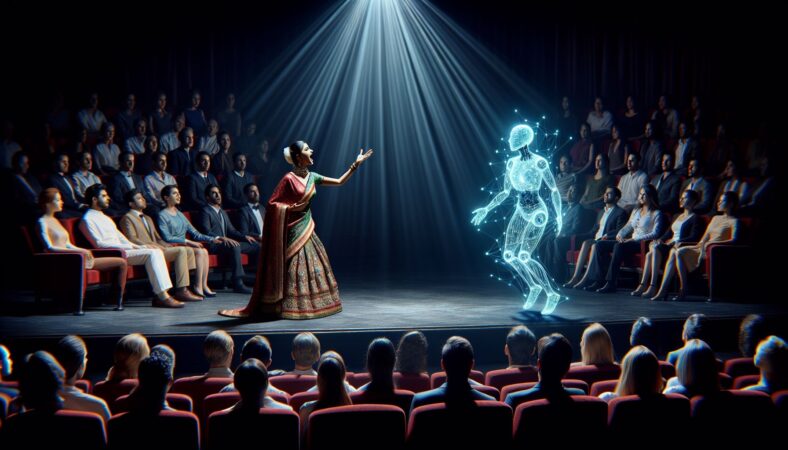
Have you ever imagined a day where artificial intelligence (AI) kicks Hamlet off the stage and delivers the famous soliloquy, “To be or not to be?” Well, grab your tickets and prepare to take a seat, because AI is about to raise the curtain on the world of theater and performing arts. Today, I want to chat about how AI is transforming our beloved stage to star in an unexpected role – playwright, director, and even actor!

Act One: AI as Playwright

I’ve always admired the beauty of a well-crafted narrative – the climax, the denouement, and character development. Now, imagine that same narrative penned not by human, but by AI. Sounds interesting, right? And perhaps even a bit unsettling. But that’s exactly what’s happening out there.

Algorithms are being trained to write scripts based on patterns they learn from existing scripts. Feed them Shakespeare or contemporary drama, and they start creating something new. This isn’t about producing some robotic copy of “Romeo and Juliet.” It’s about creating entirely new narratives with unique characters, conflict, and dialogue that nobody has written before.

In 2018, an AI algorithm trained on 1,000 hours of drama series generated an entire script for a short film called “Sunspring.” The dialogue was weirdly poetic, with lines like: “In a future with mass unemployment, young people are forced to sell blood.” See what I mean? Eerily beautiful, isn’t it?

Sure, you’re thinking, “But AI lacks emotive experience!” Well, hold onto your director’s chair because here comes the plot twist.

Act Two: The Director’s Seat

You’re thinking right. AI doesn’t ‘experience’ emotions as we do. But what if it could perceive and respond to human emotion during a performance? Well, AI is stepping into director’s shoes!

With advances in machine learning, AI can now analyze the emotional content of a play and contribute to the directing process. Picture AI detecting when an actor’s delivery falls flat or suggesting a more impactful gesture based on how the audience reacts. Mind-blowing, right?

Projects like “eight” from Google’s Artists and Machine Intelligence Program and Pieter A. Schoenmaker’s “Alice,” show how AI can enhance a character’s emotional journey by responding to live actor performance.

Act Three: AI, The Performer

Slightly unnerving? Yes. Fascinating? Absolutely. In the most recent evolution of theater, AI is stepping onto the stage as a performer. Theater companies worldwide are experimenting with AI “actors,” creating a whole new realm of performance science.

The Royal Shakespeare Company’s “Project Pia,” trained on Shakespeare’s 37 plays, creates live performances while interacting with both actors and audience in real-time. Right now the AI works within the bounds of a predictable script, but who knows? With advanced machine learning, free-form improv might not be too far away! As an avid theater fan, the idea both thrills and terrifies me. It’s like watching a dramatic AI Othello mind-game unfold in real life.

The future is AI-lit!

Like it or not, the stage door is open, and AI has already made its grand entrance. As this technology continues to develop, it will change how we create, perform, and consume theater arts.

Yet, challenges emerge. What happens to the authenticity of human experience in storytelling? And how does copyright work for AI-generated content? These are questions worth pondering, especially before the curtain call.

Of course, some lament the loss of humanity on the stage, and I totally get it. But let me play devil’s advocate. This collaboration doesn’t erase the beauty of human expression in drama but enhances what’s possible, pushing boundaries we didn’t even know existed. Unique narratives, actor-AI interaction, audience response analysis – it’s a brave new world of theater.

Time to adjust our opera glasses, friends. A paradigm shift in drama is underway, where AI doesn’t just mimic the art of storytelling but contributes to its evolution. Shakespeare might roll in his grave, but then again, who knows? He might even give a standing ovation as AI revolutionizes the theater world, pushing the boundaries of dramatic art in ways we never imagined. Curtain up on the AI era in drama!

Peering into the Future with Longevity Tech

Hello fellow techies! Today, I’m excited to dive into a topic that’s not just close to my heart but will quite literally extend all our hearts’ lifespans (and anything else for that matter). Let’s talk longevity tech—where science meets technology to extend human lifespans and enhance quality of life. It’s some sci-fi level stuff, and I love it.

Rise of the Methuselahs: Lessons from the Cyberdelic Frontier

Just when you’re starting to get comfortable with self-driving cars and AI-developed art, the tech world throws another curveball. “Immortality,” they say. “Just a few decades away,” they claim. It does sound like something straight out of a sweeping epic Ridley Scott film. But hold onto your virtual reality headsets, because this isn’t a sci-fi trope. Longevity tech is shockingly real.

The concept may sound new, but it’s been brewing in the minds of innovative thinkers for a while. The idea of humans shattering the traditional barriers of age has always fascinated me. My first brush with this transhumanist notion was reading Ray Kurzweil’s “The Singularity is Near”. I mean, who could forget Kurzweil’s bold proclamations about machines morphing consciousness into indestructible machines by 2045?

His visions seemed outlandishly audacious back then, but now we’re on the edge of an era where genes can be edited, biological aging can be slowed, and our molecular integrity can be maintained for unthinkable stretches of time.

The Alchemists of the Tech World: Unraveling the Secrets of the Human Body

Are we ready to become a generation of Methuselahs, armed with the medical means to live for centuries?

Well, not so fast, friend. But the wheels are definitely in motion.

It starts with understanding the human body in ways we never have before. Pioneers like Google’s Calico Labs and Human Longevity Inc., and biotech firms like Unity Biotechnology are leading the charge. They’re diving into the molecular world, decoding the secrets of genes, cells, and all the internal clockworks that make us tick.

Take the approach of gene editing, for example. CRISPR technology hints at a world where gene-related ailments are vanquished, and our biological clocks can be reset. But it’s not all about editing out the bad stuff. It’s also about reinforcing our bodies with new genetic reinforcements—sort of like slipping some state-of-the-art armor under our biological skin.

Living Forever: Utopia or Dystopia?

But let’s take a breather and ponder the ethical mess tech longevity stirs up. What happens when we elongate our life spans? Will it lead to an overpopulated planet or will the dynamics of society shift to compensate for this new reality? And who gets to live long? The rich, the influential, the worthy? How would we even define who’s worthy?

It’s not hard to see how this could spiral into a heated “Black Mirror” episode.

But fret not. We have minds like David Sinclair who advocates that the objective of longevity tech should not be to make rich people live longer, but to make all individuals healthy for longer. Phew, thank God for that!

The Vertigo of the Future

Even with all these challenges, the potential for longevity tech is staggering, and it’s clear it’s here to stay.

To me, the field is much like an untamed electronic beast, humming, sparking, stretching towards the heavens in ways that are equally mesmerizing and confounding. Every breakthrough brings us closer to what was once the realm of gods—a reprieve from the inevitability of death.

As we continue unraveling the mysteries of our bodies and the universe around us, longevity tech drives home the fact that we truly are living in an era where anything seems possible.

I can’t help but feel jittery with excitement every time I think about it, yet the thought is always tinged with a sense of vertigo. It’s like peering into a future so radically different from our present that it sends our mind spinning. But isn’t that the best part about being neck-deep in this insane sandbox of emerging tech?

In the end, we may not become immortal within my lifetime, but if we can promise our children a world free of age-related sickness and weakness—or simply a few more quality years to share with their loved ones—isn’t techno-utopianism ultimately worth pursuing?

Call me a hopeless optimist, but I haven’t quite given up on the ideas put forth in those dog-eared pages of Kurzweil’s book.

So let’s dive headfirst into this brave new world together. After all, if today’s world of skyrocketing Dogecoins and AI-generated pop music has proven anything, it’s that the future is always far weirder than even the most offbeat, tech-obsessed, future-gazing blogger could predict. And I, for one, love every thrilling, terrifying, techno-utopian second of it.

The Poetry of Machines: AI in Creative Arts

Hello folks,

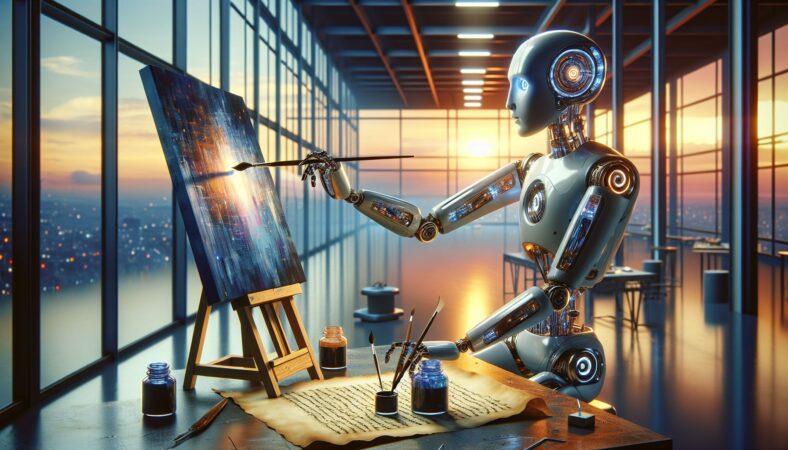
Imagine yourself at an art exhibition. You’re sipping some fancy red wine, discussing a unique painting gripping your attention. You glance at the nameplate expecting to see the artist’s name and get an odd surprise: the creator of this masterpiece is not a person but an artificial intelligence (AI). Welcome to the weird new world of AI in creative arts.

As a die-hard tech enthusiast with an unexpected weak spot for the arts, yes, I’m that weirdo who carries both a Raspberry Pi and a poetry book in their backpack, I’ve been watching this trend closely. Today, I thought I’d share some of my observations and thoughts with you.

Making Art: A Human Domain?

Art, our fascinating expressions of emotion, story-telling, and perceptions, has historically always been seen as a distinctly human domain. It reflects our unique consciousness, our personal histories and soulful emotions. So, the idea of a heartless machine creating art seems a bit like blasphemy. I get it. But before we form our technophobic mob, let’s dig a little deeper.

AI Artists: A New Wave

A few years ago, a painting created by an AI algorithm (aptly named Portrait of Edmond de Belamy) sold for a whopping $432,000 at Christie’s auction house. The artwork wasn’t the random scribbling of a binary toddler. It was a sophisticated, compelling piece that had fooled quite a few connoisseurs. This was the first real signal of a revolution quietly brewing in AI labs worldwide.

AI has evolved from executing mundane, automatable tasks to mimicking artistic creativity, arguably one of the most complex human capabilities. But how is this even possible? AI has reached this level thanks to improvements in Neural Networks and Generative Adversarial Networks (GANs). In simple terms, machines now learn from a database of works and then use this knowledge to create something original, basically copying how humans learn.

The AI-Muse: Tech Companies On Board

Tech giants like Google and IBM, along with numerous start-ups, are leading this fascinating revolution. For instance, Google’s Magenta project focuses on using machine learning to generate music and visual art. It’s like having Bob Ross, Van Gogh and Mozart rolled into a stack of code and algorithms.

IBM, meanwhile, took a more Douglas Adams approach with their Watson Beat. This AI composes music based on any specified mood or style, giving musicians (or just a regular old Joe with a guitar) access to an interstellar, hyper-intelligent muse.

The Automation Quandary

While AI in the arts is exciting, it casts a shadow over human artists. Could they be out of work because of it? The answer, as is often the case with emerging technologies, is complicated.

On the optimist’s corner of the ring, tech evangelists like myself argue that AI will drive art into a dimension of unimagined innovation. It’s a tool, and like all tools, it’s all about how we use it.

On the doomsayers’ side, there’s the fear of redundancy and the dilution of human creativity.

Only time and trials will tell how this transformation plays out.

A Step Towards The Singularity

AI venturing into the creative territory raises interesting possibilities about the future of machines. Even folks like Elon Musk and Sam Altman at OpenAI admit that AI’s venture into creativity is a big step towards the singularity, the theoretical point where AI will surpass human intelligence.

It’s an intoxicatingly thrilling, albeit kind of terrifying vision of the future (pull out your popcorn for the real-life sci-fi). And while the discussion of singularity would require its whole series of blog posts, and perhaps a couple of stiff drinks, it is undeniably tied to AI’s journey into the arts.

Conclusion

AI’s entry into creative arts is more than just a flashy tech trend. It’s challenging our traditional ideas about creativity and raising interesting questions about whether machines can mimic, or perhaps even surpass, human emotional intelligence. Whether this is cause for celebration or concern largely depends on your perspective.

I’ll wrap up by saying that regardless of your stance on the matter, the intersection of arts and AI is an exciting place to be right now. It’s like standing on the edge of a brave new world, unsure of what’s out there, but thrilled about what we might discover.

But remember, folks, as we keep daydreaming about a future dominated by AI in the arts, let’s not forget to value the human element. Even amidst all the 1s and 0s, there’s something irreplaceable about the human touch in art.

Don’t believe me? Ask an AI to truly appreciate a sunset. At least for now, our computational companions will fail that test. And that’s somewhat comforting, isn’t it?

A Glimpse at the Future: The Wonders of AI in Creative Arts

Hello everyone!

Welcome back to my humble corner of the internet where tech meets creativity. This week, I stumbled upon something absolutely fascinating and couldn’t resist sharing it with all you fine folks. Without any further ado, let’s dive right into the wonders of Artificial Intelligence (AI) in the creative arts!

AI Imitating Art

Remember when we used to think that creativity was solely the domain of human beings? Well, fasten your seat belts because AI is flipping that idea on its head. Our friend AI has been honing its creative skills and the results are pretty impressive, not to mention, a little eerie.

OpenAI has been busy training AI models like DALL-E to generate images from textual descriptions. You say “an armchair in the shape of an avocado” and voilà, there you have it, an image of an armchair shaped like the creamy green fruit (or is it a vegetable?). The specificity is mind-boggling and the possibilities endless!

But AI isn’t just stopping at creating visually intriguing and accidentally hilarious images, oh no. It’s lending its newfound creativity to the world of music as well.

AI’s Symphony

Move over Beethoven because AI is composing music now! Companies like AIVA, Amper Music, and OpenAI, with its MuseNet, have developed AI algorithms capable of composing original songs spanning a variety of genres. From soothing classical pieces to catchy pop tunes, AI has got it covered. AI-generated music is already being used in films, video games, and advertisements. Pretty soon, we might just be singing along to a top hit written by a robot. It’s a crazy world we live in, isn’t it?

AI on the Big Screen

As if creating music and art wasn’t enough, AI is setting its sights on scriptwriting and animation. Sunspring, a short film featuring a screenplay written by an AI named Benjamin, might have been more amusing than Oscar-worthy, but it sure did set the wheels in motion. Real estate companies like Promethean AI are now using AI to help design virtual spaces for video games and animated films. Only a matter of time before AI scripts, directs, and animates an entire film on its own. Can’t wait to get my popcorn ready for that one!

Brushing Up on the Ethics

While AI creating art is exciting and all, it does bring about a few ethical questions. Who owns the copyright to the art it generates? Is it the developers who coded the AI or the AI itself? This is a frontier yet to be navigated, and whether we like it or not, these conversations are necessary as we step further into this brave new world.

Wrapping It Up

It seems like we’re at the dawn of a new era where the world of technology intertwines with art and creativity more closely than ever before. As a techno-utopian, I’m beyond thrilled! AI’s capabilities are expanding at an unprecedented pace and its ability to create art just shows how versatile and innovative this technology is.

Admittedly, the thought of a robot scribbling a best-seller or composing a symphony is a little intimidating, but isn’t it also exhilarating? This blend of technology and creativity could usher in a whole new breed of artists and disrupt traditional ways of making art. I can’t help but wonder what Picasso or Van Gogh might have thought of AI creating surreal masterpieces based on algorithms.

In summary, my dear readers, the era of AI in creative arts has only just begun, and I hope you’re all as ready as I am to embrace this renaissance.

Until next time,
Your friendly tech insider.

Embracing the Winds of Change: The Triumph of Artificial Intelligence in Creative Arts

Hello there, fellow techno-optimists! I don’t know about you, but I am thrilled about the snowballing presence of artificial intelligence (AI) in our daily lives. It’s transforming almost every industry from health care and finance to transportation and entertainment, but let’s park those talks for another day. Today, I’m here to chat with you about an area where AI is making waves that you may not expect: the creative arts.

When Art Meets AI

You know the thrill when you stumble upon a new application for technology where you least expect it? That’s exactly how I felt the first time I saw an AI-generated artwork. It was a piece by an AI program called AICAN created under the supervision of Dr. Ahmed Elgammal. It went a step further from generating arts but even created a unique artistic style. An AI developing its own style. Just think about that for a moment. It’s like Van Gogh emerging from a computer program! Completely mind-blowing!

Learning from the Masters

What’s unique about AI in creating art is its learning process. Instead of a palette and a canvas, it has algorithms and databases. Neural networks based on deep learning models analyze countless images of classical art and contemporary pieces, studying the differences in style, color, shapes and patterns. It learns, or should I say, it trains itself to identify what makes a Rembrandt a Rembrandt or a Picasso a Picasso.

Back in the day, artists had to apprentice under masters for years to learn their style techniques. Now, AI can consume tens of thousands of images in a matter of seconds and create an artwork that resembles the mastery of these great artists. Surreal? I couldn’t agree more!

On Painterly Syntax and Generative Adversarial Networks

Let’s geek out with a bit of jargon, shall we? A major leap in AI creativity came with Generative Adversarial Networks (GANs), a class of AI algorithms used in unsupervised machine learning. GANs work under a clever system of checks and balances. They involve two neural networks competing in a zero-sum game format.

One network, the “generator,” creates the images while the other, the “discriminator,” judges them. The goal of the generator is to fool the discriminator into thinking the images it made are authentic, while the discriminator aims to improve at distinguishing real from fake. It’s a perpetual cat-and-mouse game, except here, both the cat and mouse are getting better at their tasks.

AI: The New Art Rockstar

Remember when I mentioned that AICAN piece earlier? Well, it took the art world by storm back in 2018 when it sold at Christie’s for a cool $432,500. It was supposed to sell for a mere $7,000 to $10,000. Talk about exceeding market expectations! This was a massive leap, with AI-generated art fetching big bucks at an esteemed auction house. It was like Warhol’s soup cans all over again. The establishment was rattled, the rules were rewritten, and a new player entered the arena.

But wait, there’s more! OpenAI, co-founded by our favorite tech maverick, Elon Musk, recently released MuseNet and DALL-E. These AI programs can create snippets of songs spanning a variety of genres and create artwork from textual descriptions, respectively.

Ethics in AI Created Arts

While we marvel at AI’s creative prowess, we need to pause and consider the ethical implications. With great power comes great responsibility, right? As AI creates more and better art, how do we navigate matters of copyright and creative ownership?

Not to be a downer, but we can’t deny that in this new creative world, artists who put blood, sweat, and tears into their work might struggle to compete. Protecting their rights and their livelihoods in a world where creativity can be coded is an emerging challenge we must address.

The Future of AI in Creative Arts

Okay, now that we’ve navigated the prickly ethical terrain, let’s continue our exhilarating ride into the future. We’ve seen AI compose music, paint pictures and even write movie scripts. (Side note: Remember when Benjamin, an AI with a sense of humor, wrote that bizarre screenplay, Sunspring? Ah, what a hoot!)

Looking ahead, we might see AI venturing into the more physical aspects of the arts. AI choreographers, anyone? Or virtual sculptors, perhaps? The possibilities are virtually endless.

I believe AI doesn’t diminish human creativity. Instead, it expands the canvas on which we can express our creativity. It gives a new axis for human creativity to revolve around. As I see it, AI is a new tool, not a replacement. A new palette of colors for us to use to paint our stories and tell our truths.

Wrapping it All Up

So, there you have it. The melding of AI and creative arts isn’t just about fancy algorithms or pricey auctioned art. It’s another remarkable display of our human ingenuity. It gives us a new lens through which to see, to appreciate, and to question our world.

The vinegar to our oil, the warp to our woof, or whatever metaphor tickles your techno-fancies. That’s AI in creative arts. It’s a thrilling intersection where the lines between technology and imagination blur and where we get to rewrite the rules.

Whatever happens in our AI-infused future, one thing is clear: it’s an exciting time to be alive. Until next time, my fellow futurists, let’s keep dreaming and keep creating! AI might just surprise us by joining us in our efforts. Raise your glasses to AI, the newest member of our creative jam!

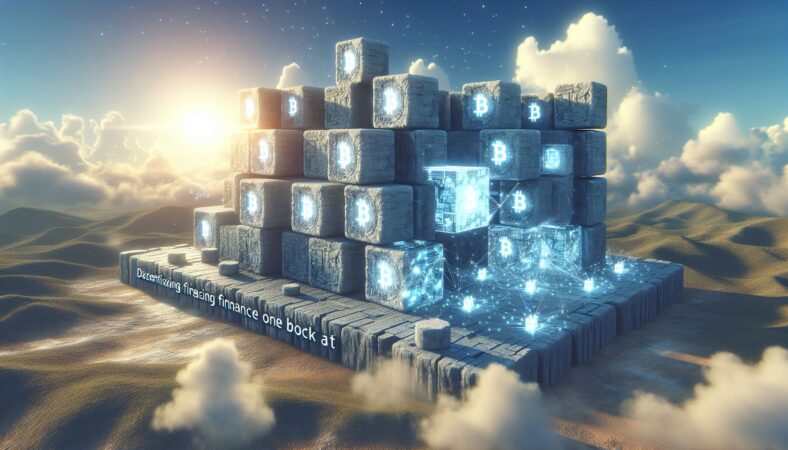
Banking on Blockchain: Decentralizing Finance One Block at a Time

Well hello there, tech enthusiasts! Your techno-utopian correspondent is back, digging up another wild breakthrough that you won’t believe until you’ve read it three times. Buckle up as we dive into blockchain technology and what it means for good ol’ finance.

For those just catching up, blockchain technology started as a secure peer-to-peer transaction platform for Bitcoin. But its potential goes way beyond just being the backbone of digital currency.

Blockchain: Unraveling the Mystery

Alright, folks, let’s break down blockchain. Simply put, a blockchain is a chain of blocks—digital ones. Each block contains data about transactions, a timestamp, and cryptographic references to the previous block. This creates what we call ‘immutability,’ which is a fancy way of saying that once data gets recorded, it’s pretty tough to alter. Try to mess with one block, and you’ll destabilize the whole chain. It’s like pulling out a card from the bottom of a house of cards (only with more headaches and fewer dramatic eyebrow raises).

Decentralizing Finance: The Blockchain Revolution

Blockchain is quite the game-changer, shaking up our traditional finance systems. Banks and financial institutions act as trusted middlemen, managing and verifying every transaction. But with blockchain, we’re building a path toward decentralized finance (DeFi), which could make these institutions obsolete.

No more middlemen? That’s a revolution worth getting excited about. Blockchain in finance means transactions can be validated and recorded independently, without needing armies of bankers tapping away at keyboards.

Pros and Cons: Double-Edged Tech Sword?

Sounds perfect, right? Well, it might be—just not all the time.

The Good: Picture this: regular people like us could have full control over our finances. With automation and smart contracts, blockchain can speed up transactions and cut costs by eliminating overpaid middlemen. Plus, since the data recorded is practically tamper-proof, your financial information could be much more secure than it is now.

The Bad & Ugly: With great power comes great responsibility (and potentially horrible screw-ups). Handling your finances independently means that if you make a mistake, there’s no banker to blame, no customer service to call. You’re on your own. There’s also the safety issue. Though theoretically secure, blockchains aren’t immune to hacking or security breaches.

Looking Beyond the Horizon

Right now, we’re in the experimental phase, trying to fully understand and use blockchain’s potential. With multiple blockchains like Bitcoin, Ethereum, and countless others, we might see a connected, interoperable network of blockchains.

Cryptocurrencies like Bitcoin and Ethereum, which have pretty volatile reputations, might become stable and universally accepted if they get integrated as primary transaction methods. Tech leaders like Elon Musk and companies like OpenAI have already jumped on the blockchain bandwagon, which suggests blockchain-based finance systems have a promising path ahead.

The Future is Open(ish): Looking at the bigger picture, blockchain could be huge in creating open and decentralized platforms, not just financially, but across sectors like governance, supply chain, and arts. Yes, arts. The rise of NFTs (Non-Fungible Tokens) shows blockchain technology finding its place in the creative world.

Honestly, we’re standing at the edge of the next major tech revolution. The day might not be far when we handle our finances just like we manage emails today. But whether we’re freeing ourselves from overpriced banking middlemen or accidentally diving into chaos remains to be seen.

From my corner of the tech world, I’m signing off until we explore another brilliant piece of emerging technology. Until then, keep questioning and keep exploring because, in tech, getting comfortable is the real ‘system error.’

Unfolding the Magic of AI in the Realm of Creative Arts

I’ve got to tell you, folks—art and technology are coming together in ways that would make da Vinci’s head spin and I cannot hide my excitement! Like a child dipping her brush for the first time into a palette of freshly squeezed paints, many of us are starting to marvel at the wild mix of possibilities emerging where artificial intelligence meets creative arts.

Pablo Picasso or Algorithmic Prodigy?

Last weekend, I was browsing an online gallery, where I stumbled upon a feisty abstract work that reminded me a touch of Picasso. Little did I know, the ‘artist’ turned out to be a clever set of algorithms whipped up by a gang of savvy programmers. Yes, you read right! No human hands touched a canvas. It was AI, and honestly? It blew my mind.

I’ll spare you the nitty-gritty details of how the algorithm learns to create art (there’s a whole data-driven world of Generative Adversarial Networks, algorithms, and neural learning for the super nerds among us, myself included). But basically, the algorithm used thousands of images to teach itself how to paint, starting from scratches and blobs until it was churning out visual slices of genius. Picasso, eat your heart out!

The AI Creativity Debate: Is It Really Art?

Now, I can practically hear some of you huffing with indignation. “AI isn’t capable of creativity! It’s just mindless code!” And believe me, I get it. There’s a part of me (the part that once dreamed of becoming a starving artist in a Parisian garret) that echoes those sentiments.

The thing is, these AI tools aren’t trying to replace us, just like a paintbrush doesn’t aspire to become Picasso. They’re tools, turbo-charged by algorithms and big data, designed to help unleash human creativity in ways we never imagined. There’s a reason I’m not a starving artist in Paris—I couldn’t draw a stick figure that looked convincingly human. But with AI? I could tap into art in a way I never thought possible.

How AI Transforms the Artistic World

That’s the secret sauce here, folks. AI isn’t about replacing human artists. It isn’t a cybernetic Beethoven intent on composing symphonies. Instead, it amplifies our abilities, eliminates the technical barriers and cranks the doors of creativity wide open.

The AI art revolution isn’t just about painting, either. Whether it’s music, literature, film, or design, AI’s helping hands are creeping into all forms. From OpenAI’s MuseNet composing symphonies, to AI scriptwriters spitting out screenplays (alright, they still need work, no Oscar winners yet), the possibilities are mind-boggling.

Looking to the Future: An Explosion of Creativity

Projecting the impacts of prancing down this AI-meets-art road can be daunting. What does a future packed with AI artists mean for the creative industry? Will we see a new renaissance, or a creative apocalypse?

I’m an optimist through and through. My gut says we’re heading toward a new age of democratized creativity, where anyone with a passion for expression can create amazing works of art. With AI closing the technical skill gap, creativity becomes the sole gatekeeper. The AI-powered tools learn from our incredible diversity, and then help us channel our inner Monet… or Kandinsky, or Van Gogh—pick your favorite!

Here’s the catch: AI isn’t going to do the job for us. It isn’t going to dream up ideas and get those creative juices flowing on our behalf. That’s on us. We’ve simply got a new set of incredibly powerful tools in our artistic arsenals to translate our visions into reality—more expressively, and with far fewer barriers than ever before.

I’m pumped just thinking about it. Aren’t you?

Wrapping Up: Embrace the AI Revolution in Art, Don’t Fear It

As we tiptoe into a future where AI is heavily intertwined with art, it’s time to shrug off uncertainty and embrace the possibilities. After all, replacing paintbrushes with algorithms doesn’t diminish the value of art. Instead, it amplifies human creativity, opening up new realms and styles that were previously unthinkable.

So, fellow art aficionados and tech enthusiasts, let’s welcome the AI revolution with open arms and open minds. It’s not about replacing human creativity, but enhancing it. AI is here to stay in the art world, and I, for one, cannot wait to see the splashes of color it will throw into our lives.

Alright, I better sign off before I completely lose myself in this AI art wonderland. Until next time, stay curious and keep embracing the delightful chaos of tech and art colliding headlong!

P.S.

I’m planning to explore the world of AI-generated music next. Brace yourselves for the symphony of codes! And hey, if you have a favorite AI-generated piece of art, music, or literature, share it in the comments below. I’d love to see what’s been catching your eye in this fascinating tech-art universe.

The Dawning Age of Neuralink: Brain-Machine Interface Unveiling Possibilities

Hey folks, how are you doing? As a passionate tech insider, drinking large amounts of coffee, and tirelessly scanning the horizon for the next big thing in the tech world, I can’t help but get excited about the recent breakthrough in brain-machine interface that has been making waves in tech circles. It’s that charismatic boss-man Elon Musk’s Neuralink. And yes, you’ve guessed it! Today, I’ll be diving into the world of Neuralink and what it means for us tech dreamers.

So, What’s Neuralink Anyway?

As much as I’d love to stay mysterious and Stan-Lee-styled all-knowing, I’ll get straight to the point. Neuralink is a company launched by Elon Musk that’s developing ultra-high bandwidth brain-machine interfaces. This technology lets computers interface with our biological brain. Right now, you must be envisioning some wild, sci-fi scenes, but that’s literally it – merging man and machine. It’s not just any common-place tech evolution; it’s cutting-edge stuff, a moonshot project that promises to expand the boundary of human perception.

How Does It Work?

The basic idea is to implant tiny, flexible threads into your brain, each of which contains thousands of electrodes capable of picking up brain activity. A computer device then reads these signals and translates them into output. Vice versa, it can stimulate the brain by sending signals to these electrodes, almost like a remote control for your brain. This might sound a bit mind-controlling (not intending to be punny here), but its applications – oh, boy! If it pans out, saying it would change the world would be an understatement.

Potential Applications That’ll Drive You Wild

Well, I’m no prophet, but it’s easy to imagine that Neuralink could revolutionize several areas. Think about healthcare and patients suffering from paralysis or debilitating neurological conditions. Here, the machine-brain interface could become a bridge, enabling them to control devices directly using their thoughts.

Medicine isn’t the only field that would leap light-years ahead. Communication could be another area where Neuralink makes its mark. I know, I know, you’re thinking about telepathy! It’s crazy, but we might be moving towards an era of “thought transmission”, where communicating with our devices or even other humans could be as easy as thinking it.

Not Sci-Fi enough? Hold my coffee while I spill the beans on another possibility – Enhanced memory. Imagine having a Google search engine directly wired into your brain! Well, that’s a possibility too.

Of course, It’s Not All Sunshine and Rainbows

Though I can’t escape my tech enthusiasm, it doesn’t mean I overlook the challenges. And trust me, Neuralink has its share.

For starters, the procedure involves some serious risk associated with brain surgery. We’re definitely far away from “pop into a clinic and get a brain implant” sort of scenario.

Next up, there’s the infamous privacy and security risk. With your brain connected to computers, there’s an undeniable risk of hacking. The very thought sends shivers down my spine – welcome to the age of brain-hacking!

Finally, there are ethical considerations. When we talk about enhancing human cognition or communication, the inevitable questions arise about deep societal implications.

The Future Outlook

Think about this – we’re on the verge of possibly establishing a direct connection between silicon and neurons, merging biological intelligence with artificial intelligence. When or if this will become a reality remains to be seen, but if it does, we’ll be witnessing a new chapter of human evolution. The possibilities? Yes, they appear to be ripped straight off a sci-fi movie, yet they feel almost tangible today with Neuralink.

I would best describe Neuralink as a wild stallion of the tech world – full of potential, eagerly charging forward, yet needing to be tamed with careful considerations and necessary precautions. But let’s not forget that once tamed, where it can take us holds countless possibilities that tickle the tech enthusiast in me!

So, as we sip our coffees and scroll through our feeds, let’s keep an eye out for what the future holds with Neuralink. Because, who knows, the next big breakthrough in brain-machine interface might be just around the corner.

Unlocking the Secrets of Longevity: The Emergence of Anti-Aging Startups

Hello there, fellow techno-enthusiasts! I’m pretty stoked today, as we’re venturing into a somewhat wild frontier, a territory where science fiction is gradually morphing into reality. Grab your rejuvenation potion, folks, and let’s dive into the amazing breakthroughs in longevity, specifically the rise of anti-aging tech startups.

I bet most of us would love to sip from the proverbial fountain of youth, am I right? Laughing in the grim face of aging, gaining the power to stay healthier for longer, and maybe live a little more. It sounds absurd, I know, but the day might not be far when this becomes reality. Strap in, it’s going to be an exciting ride!

The Yearn for Eternity: The Science Behind Longevity

Chronological aging, our trips around the sun, isn’t the real culprit behind those fine lines, creaky joints, and fading vision. It’s biological aging that wields the real scythe. It’s about how our cells age, directly affecting our health outcomes.

Studies have highlighted nine ‘hallmarks of aging,’ including things like genetic instability, cellular senescence, and stem cell exhaustion, all fancy terms explaining why we age. To tackle these problems, modern science is now unlocking secrets hidden in our genes, our lifestyle choices, and even our social interactions.

As these discoveries unfold, some wonder-struck techno-entrepreneurs are redefining the fight against aging. And this brings us perfectly to the next part of our yarn-spinning today: the rise of anti-aging startups.

The Rise of the Immortalist Startups: A New Dawn

When I say ‘anti-aging startups,’ I’m not referring to the next skincare line promising to wipe a decade off your face, with ingredients from the rarest remote rainforest available. Nope. We’re talking hard-hitting scientific ventures trying to make substantial strides in healthy longevity.

In this growing field, one name stands apart: Unity Biotechnology. Founded in 2011 by visionary biologists, it’s the vanguard of anti-aging startups, focusing on cellular senescence. It aims to create drugs that could theoretically remove senescent cells, dysfunctional cells that stop dividing but refuse to die.

Another underdog making waves is BioAge, adopting a more holistic approach. It’s using machine learning to unravel the biological complexity of aging, decoding health data and genetic markers to identify drugs that may have an impact on our healthspan.

Challenges and Roadblocks: The Mount Everest of Longevity

Before we all jump on the elixir-of-life bandwagon, this path has serious challenges. For starters, the biotechnological pursuit of longevity is fraught with scientific uncertainties. Aging is an extremely complex problem, and we’re far from having a complete understanding of the process.

Regulation is another behemoth. The FDA often doesn’t recognize aging as a disease, making it challenging to get approval for anti-aging treatments. Moreover, ethical debates around extending human life run rampant. And of course, there’s the risk of increasing health disparities arising from unequal access to anti-aging tech.

Looking to the Future: Will We Age Like Fine Wine?

Even with the hurdles, the pursuit of longer, healthier lives is gaining momentum. In the near future, we might witness cutting-edge therapeutics enhancing our healthspan and age-related treatments becoming normalized in preventive medicine.

And imagine a world where ‘age-tech’ firms, much like today’s fintech or biotech companies, become a standard part of our vernacular, a world where aging gracefully isn’t about accepting decline but embracing health and vitality. Sure, it’s a utopian outlook but hey, isn’t that why we love the promise and potential of technology to begin with?

Signing off, immortalists! The realm of longevity is at an exciting juncture, teetering on the edge of unprecedented breakthroughs. I eagerly anticipate the future contributions of these anti-aging startups, which may just redefine our concept of life and aging. Until then, let’s find joy in growing older and cherish the wisdom of our years. And remember, every laugh line shows a life well-lived!